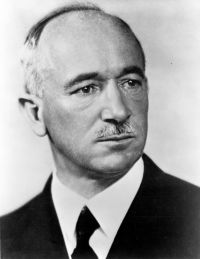
Edvard Beneš

Edvard Beneš

Summary

Portrait of Edvard Beneš Edvard Beneš The New Europe (1917)

In these circumstances they would not wish to remain in Austria-Hungary for anything in the world.
Again, to satisfy the Slavs and to initiate any process of constitutional reform inevitably opens the road to the dissolution of the Monarchy. The Germans, the Magyars, and the ruling classes thoroughly understand the position. They know that the Slavs cannot and will not yield. They know also that to attempt to establish a real federation would inevitably lead the uncontrolled force of the Slavs to strip their enemies first of all their privileges and then ultimately to quit the Monarchy.
Source: Wikisource

Portrait of Edvard Beneš Edvard Beneš The New Europe (1917)

Germany and the Habsburg Problem
The political situation in Austria-Hungary is singularly critical. The monarchy is economically on the edge of the abyss; the working classes are reduced to absolute want; the lower middle class (officials, employees, etc., particularly) are starving; whilst the upper middle class, manufacturers and tradespeople, are ruined. From the intellectual point of view there is complete demoralisation: the nation is exhausted, its resistance broken; it is as incapable of moral elevation as of rebellion.
Source: Wikisource

Portrait of Edvard Beneš Edvard Beneš The New Europe (1917)

She seeks to impress upon the Austrian Germans that, in the interest of Deutschtum, it is their duty to make sacrifices in favour of the Austrian Slavs, that, to a certain extent, they must sacrifice themselves in the true sense of the word, and that they will render to Germany an infinitely greater service if they preserve their State, in which they will share their power with the other nations, than if they compromise everything by hurrying on the general ruin.
Source: Wikisource

Get perspective with Kwize: daily news enlightened by great literature