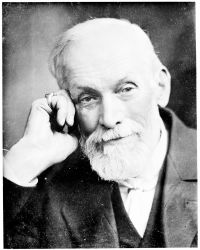
Edward Morell Holmes

Edward Morell Holmes

Summary

Portrait of Edward Morell Holmes Edward Morell Holmes 1911 Encyclopædia Britannica (1911)

In 1748 the Apothecaries’ Corporation obtained a charter empowering them to license apothecaries to sell medicines in London, or within 7 m., and intended to use it to restrain chemists and druggists from practising pharmacy, and to prohibit physicians and surgeons from selling the medicines they prescribed, but the apothecaries, by paying increased attention to medical and surgical practice, had not only alienated the physicians and surgeons, but materially strengthened the position of chemists and druggists as dispensers of prescriptions.
Source: Wikisource

Portrait of Edward Morell Holmes Edward Morell Holmes 1911 Encyclopædia Britannica (1911)

The practice of pharmacy was extended by the Arabian physicians, and the separation of it from medicine was recognized in the 8th, and legalized in the 11th century. The practice of “polypharmacy,” or the use of a large number of ingredients in prescriptions, which was common in the middle ages, was greatly due to the view enunciated by Alkekendo, and held by one of the Arabian schools of medicine: that the activity of medicine increases in a duplicate ratio when compounded with others
Source: Wikisource

Portrait of Edward Morell Holmes Edward Morell Holmes 1911 Encyclopædia Britannica (1911)

It has been decided in the law courts that a limited liability company is not a person in the eye of the law, and therefore does not come under the operation of the act of 1868. The result of this decision was that any chemist who failed to pass the qualifying examination could constitute himself with a few others, even if ignorant of pharmacy, into a limited liability company, which would then have been outside the powers of the act, and not subject to its provisions.
Source: Wikisource

Get perspective with Kwize: daily news enlightened by great literature