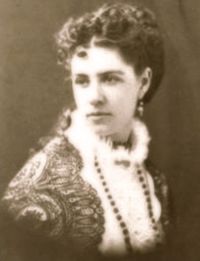
Eleanor Hull

Eleanor Hull

Folk-Lore (1919 (vol. 30), 1920 (vol. 31))

Summary

Portrait of Eleanor Hull Eleanor Hull,  Folk-Lore (1919 (vol. 30), 1920 (vol. 31))

“ As the Quest for the Grail united in a single great adventure the separate legends belonging to various Champions, who had originally no place in the Arthurian legend, so the Holy Cup itself, with all its mysterious surroundings and mystic symbols, fails to be explained on any single theory. It is not only the symbol of fecundity of the agricultural theory, or the inexhaustible cauldron of Celtic tradition, nor is it simply the sacred vessel of the worshipper of Mithra or the Christian Eucharistic cup. ”
Source: Wikisource

Portrait of Eleanor Hull Eleanor Hull,  Folk-Lore (1919 (vol. 30), 1920 (vol. 31))

“ There are living folk-tales such as the Gaelic story of the "Temple of Horrors," which seem to contain a reminiscence of ancient rites in which a bull or human being was fed up for sacrifice with some secret ritual, and into whose body the spirit of the god was believed to descend, to be afterwards imbibed by the worshipper at the sacred feast which followed the slaying of the victim.
Miss Weston contends, quite rightly in our opinion, that writers like Mr. Nutt are inclined to exaggerate the Celtic element in the Grail story.
”
Source: Wikisource

Portrait of Eleanor Hull Eleanor Hull,  Folk-Lore (1919 (vol. 30), 1920 (vol. 31))

“ The story itself and still more the ideas it enshrines, are surely composite; we doubt whether any single line of tradition will account for all.
In America the problems arising out of the Arthurian romance are being attacked from different sides by a number of folk-lorists. The careful studies appearing in Modern Philology from time to time especially are worthy of notice by all folk students in these countries.
”
Source: Wikisource

Get perspective with Kwize: daily news enlightened by great literature