Summary

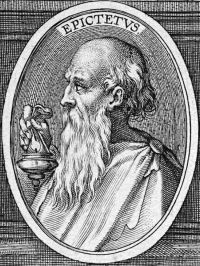
Portrait of Epictetus Epictetus Epictetus, the Discourses as reported by Arrian… (1925)

And then, although you have this purpose, because some petty trick of style, or certain principles, catch your fancy, are you going to stay just where you are and choose to dwell there, forgetful of the things at home and saying "This is fine"? Well, who says that it is not fine? But only like a passageway, like an "inn." For what is to prevent a man having the eloquence of Demosthenes and yet being unhappy, and what is to prevent him from analyzing syllogisms like Chrysippus, and yet being wretched, from sorrowing, envying, in a word, from being disturbed and miserable?
Source: Wikisource

Portrait of Epictetus Epictetus Epictetus, the Discourses as reported by Arrian… (1925)

But if you ask me, "What, then, is the highest of all things?" what shall I say? The faculty of eloquence? I cannot; but rather that of moral purpose, when it becomes a right moral purpose. For it is this which uses not only that faculty of eloquence but also all the other faculties both small and great; when this has been set right a man becomes good, when it has failed a man becomes bad; it is through this that we are unfortunate, and are fortunate, blame one another, and are pleased with one another
Source: Wikisource

Portrait of Epictetus Epictetus Epictetus, the Discourses as reported by Arrian… (1925)

When, then, this faculty sees that all the other faculties which surround it are blind and deaf, and unable to see anything but the very acts for which they have been appointed to serve and minister unto it, while it alone sees clearly and surveys, not only all the rest, determining what each is worth, but itself also, is it likely to pronounce that anything else is supreme but itself?
Source: Wikisource

Get perspective with Kwize: daily news enlightened by great literature