Summary

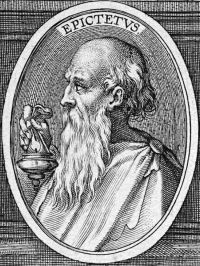
Portrait of Epictetus Epictetus Epictetus, the Discourses as reported by Arrian… (1928)

When a man has this kind of peace proclaimed to him, not by Caesar—why, how could he possibly proclaim it?—but proclaimed by God through the reason, is he not satisfied, when he is alone? When he contemplates and reflects, "Now no evil can befall me, for me there is no such thing as a brigand, for me there is no such thing as an earthquake, everything is full of peace, everything full of tranquillity; every road, every city, every fellow-traveller, neighbour, companion, all are harmless.
Source: Wikisource

Portrait of Epictetus Epictetus Epictetus, the Discourses as reported by Arrian… (1928)

But one ought none the less to prepare oneself for this also, that is, to be able to be self-sufficient, to be able to commune with oneself; even as Zeus communes with himself, and is at peace with himself, and contemplates the character of his governance, and occupies himself with ideas appropriate to himself, so ought we also to be able to converse with ourselves, not to be in need of others, not to be at a loss for some way to spend our time; we ought to devote ourselves to the study of the divine governance, and of our own relation to all other things
Source: Wikisource

Get perspective with Kwize: daily news enlightened by great literature