Summary

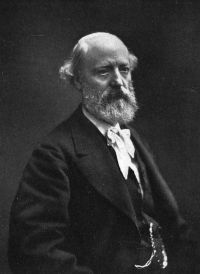
Portrait of Eugène Viollet-le-Duc Eugène Viollet-le-Duc Dictionary of French Architecture from the 11th to 16th Century…

There is a Gothic flora which has its laws, its harmony, its reason to exist so to speak, like the natural flora; one finds it in the stringcourses, in the capitals, and especially in these florets of crownings, if visible, being often detached on the sky, whose contour, modelled, the pace, can spoil a monument or give him an attractive aspect. The variety of the florets of the XIII E century is infinite, because, although our buildings of this time are covered with it, one does not know two of them which were carved on the same model.
Source: Wikisource

Portrait of Eugène Viollet-le-Duc Eugène Viollet-le-Duc Dictionary of French Architecture from the 11th to 16th Century…

That the florets of crowning belong to the 13th or the 15th century, they are always well planted, proudly bent, in perfect reports/ratios of proportion with the parts of the architecture which they overcome. The Gothic architects could crown their buildings. Our attention must all the more go on these qualities, that today the majority of our modern monuments sin obviously by the contrary defect.
Source: Wikisource

Portrait of Eugène Viollet-le-Duc Eugène Viollet-le-Duc Dictionary of French Architecture from the 11th to 16th Century…

As much imagination is tempting sometimes, when it naturally arrives, that it is a joke of the spirit, as much it tires if it is sought. The ornaments which this article provides us (ornaments of singular importance, since they are used as termination with the dominant parts of the buildings) are not the result of a whim, but well of the attentive and fine study of the plants.
Source: Wikisource

Get perspective with Kwize: daily news enlightened by great literature