Summary

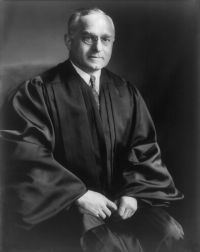
Portrait of Felix Frankfurter Felix Frankfurter Board of Trade of Kansas City v…

When the outbound shipment is tendered to the carrier, the freight bill is surrendered in order that the shipper may obtain an outbound rate lower than that which he would otherwise be compelled to pay. The privilege belongs, as it were, to both the grain and its shipper. 'The benefit attaching to grain shipped into the primary market is commonly so broad that it is transferable not only to another owner of the same grain, but to like grain coming from the same country point.' Atchison, T. & S.F. Ry.
Source: Wikisource

Portrait of Felix Frankfurter Felix Frankfurter Board of Trade of Kansas City v…

We certainly have neither technical competence nor legal authority to pronounce upon the wisdom of the course taken by the Commission. It is not for us to tinker with so sensitive an organism as the grain rate structure only a minor phase of which is caught in the record before us. If we were to grant the relief sought by the appellants, we would be restoring evils which the exclusive rate-break adjustment was designed to remove-evils which, for all we know, would be far more serious than those complained of by the appellants.
Source: Wikisource

Portrait of Felix Frankfurter Felix Frankfurter Board of Trade of Kansas City v…

Dealers at the interior points on routes passing through rate-break markets like Omaha petitioned the Commission to modify its orders so as to remove this discrimination between interior points. They urged on the Commission that inasmuch as the fundamental purpose of the rate-break combinations was the establishment of uniform proportional rates on outbound shipments from primary markets, this purpose would not be frustrated if, in order to meet the lower through rate over competitive routes, transit on the through rate were permitted at interior points on routes through rate-break markets.
Source: Wikisource

Get perspective with Kwize: daily news enlightened by great literature