Summary

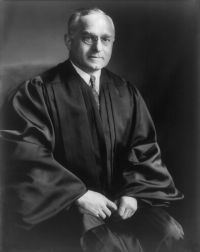
Portrait of Felix Frankfurter Felix Frankfurter Tenney v. Brandhove — Opinion of the Court

Unless Congress have and use every means of acquainting itself with the acts and the disposition of the administrative agents of the government, the country must be helpless to learn how it is being served; and unless Congress both scrutinize these things and sift them by every form of discussion, the country must remain in embarrassing, crippling ignorance of the very affairs which it is most important that it should understand and direct.
Source: Wikisource

Portrait of Felix Frankfurter Felix Frankfurter Tenney v. Brandhove — Opinion of the Court

Courts are not the place for such controversies. Self-discipline and the voters must be the ultimate reliance for discouraging or correcting such abuses. The courts should not go beyond the narrow confines of determining that a committee's inquiry may fairly be deemed within its province. To find that a committee's investigation has exceeded the bounds of legislative power it must be obvious that there was a usurpation of functions exclusively vested in the Judiciary or the Executive.
Source: Wikisource

Portrait of Felix Frankfurter Felix Frankfurter Tenney v. Brandhove — Opinion of the Court

These are difficulties we cannot hurdle. The limits of §§ 1 and 2 of the 1871 statute-now §§ 43 and 47 (3) of Title 8-were not spelled out in debate. We cannot believe that Congress-itself a staunch advocate of legislative freedom-would impinge on a tradition so well grounded in history and reason by covert inclusion in the general language before us.
We come then to the question whether from the pleadings it appears that the defendants were acting in the sphere of legitimate legislative activity. Legislatures may not of course acquire power by an unwarranted extension of privilege.
Source: Wikisource

Get perspective with Kwize: daily news enlightened by great literature