Summary

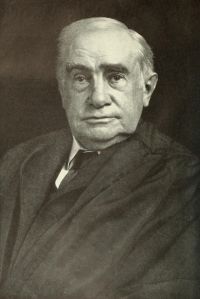
Portrait of Henry Billings Brown Henry Billings Brown Rice v. Ames — Opinion of the Court

Congress having provided for commissioners, who are not judges in the constitutional sense, had a perfect right under art. 2, § 2, ¶2 of the Constitution, to invest the district or circuit courts with the power of appointment. The only qualification required of a commissioner to act in extradition cases is that suggested by Rev. Stat. § 5270, that he shall be 'authorized so to do by any of the courts of the United States.' We know of no authority holding that Congress may not vest the courts with this power, and we are reluctant to create one.
Source: Wikisource

Portrait of Henry Billings Brown Henry Billings Brown Rice v. Ames — Opinion of the Court

We do not wish, however, to be understood as holding that, in extradition proceedings, the complaint must be sworn to by persons having actual knowledge of the offense charged. This would defeat the whole object of the treaty, as we are bound to assume that no foreign government possesses greater power than our own to order its citizens to go to another country to institute legal proceedings.
Source: Wikisource

Portrait of Henry Billings Brown Henry Billings Brown Rice v. Ames — Opinion of the Court

Clearly there is nothing either in the treaty or the statutes requiring commissioners to conform to the state practice in that regard. The only requirement seems to be that arising from the 10th section of the Ashburton Treaty, that the fugitive shall only be surrendered 'upon such evidence of criminality as, according to the laws of the place where the fugitive or person so charged shall be found, would justify his apprehension and commitment for trial, if the crime or offense had there been committed.'
4.
Source: Wikisource

Get perspective with Kwize: daily news enlightened by great literature