Summary

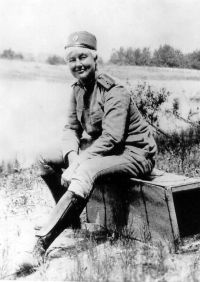
Portrait of Flora Sandes Flora Sandes An English woman-sergeant in the Serbian Army (1916)

We were routed out long before dawn, and after a cup of Turkish coffee in the kitchen all turned out into the main street of the village of Struga. In the bitterly cold grey dawn we stood around in black, churned-up mud, shivering, hungry, and miserable. The discouraged soldiers trailed along the road, in the half-light of a winter morning, and altogether we looked the most hopelessly forlorn Army imaginable, setting our faces towards the dark, hard-looking range of snow-capped mountains which separate their beloved Serbia from Albania.
Source: Gutenberg

Portrait of Flora Sandes Flora Sandes An English woman-sergeant in the Serbian Army (1916)

Serbian soldier, more than anyone else I have ever come across, can excel as a “passive resister” when he is under an unpopular officer; while all the time keeping himself just within the bounds of discipline, he will contrive to avoid doing anything he does not wish to do, while he is extraordinarily “clannish” and loyal to one whom he likes.
Source: Gutenberg

Portrait of Flora Sandes Flora Sandes An English woman-sergeant in the Serbian Army (1916)

We all talked in whispers, as if we were stalking rabbits, though I could not see that it mattered much if the Bulgarians did hear us, as they knew exactly where we were, as the bullets that came singing round one’s head directly one stood up proved, but they did not seem awfully good shots. It is a funny thing about rifle fire, that a person’s instinct always [140] seems to be to hunch up his shoulders or turn up his coat collar when he is walking about, as if it were rain, though the bullet you hear whistle past your ears is not the one that is going to hit you.
Source: Gutenberg

Get perspective with Kwize: daily news enlightened by great literature