Summary

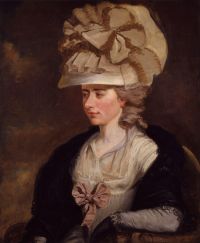
Portrait of Frances Burney Frances Burney Cecilia — Book 6/Chapter i: A DEBATE (1782)

Cecilia now, taking Henrietta's hand, was wishing her good morning; but hearing Mr Hobson say he was just come from Portman-square, her curiosity was excited, and she stayed a little longer.
"Sad work, ma'am," said he; "who'd have thought Mr Harrel asked us all to supper for the mere purpose of such a thing as that! just to serve for a blind, as one may say. But when a man's conscience is foul, what I say is it's ten to one but he makes away with himself. Let every man keep clear of the world, that's my notion, and then he will be in no such hurry to get out of it."
Source: Wikisource

Portrait of Frances Burney Frances Burney Cecilia — Book 6/Chapter i: A DEBATE (1782)

Where then was the hope that any but Delvile could have written it? in secret she could not cherish two, and that Delvile was cherished most fondly, the artlessness of her character unfitted her for disguising.
And why should he write to her? what was his pretence? That he loved her she could now less than ever believe, since his late conduct to herself, though perplexing and inconsistent, evinced at least a partiality incompatible with a passion for another.
Source: Wikisource

Portrait of Frances Burney Frances Burney Cecilia — Book 6/Chapter i: A DEBATE (1782)

For as to keeping it all for herself, I dare say she's a lady of too much generosity; and as to only marrying somebody that's got as much of his own, why it is not half so much a favour: and if the young lady would take my advice, she'd marry for love, for as to lucre, she's enough in all conscience."
"As to all that," said Mr Hobson, "it makes no alteration in my argument; I am speaking to the purpose, and not for the matter of complaisance: and therefore I'm bold to say Mr Harrel's action had nothing of the gentleman in it. A man has a right to his own life, you'll tell me
Source: Wikisource

Get perspective with Kwize: daily news enlightened by great literature