“ As often as the thought of the artist presented itself to her she fought to put it from her. Yes, yes, he came to see her often, very often. Perhaps he loved her yet. Well, suppose he did? He had always loved her. It was not wrong to have him love her, to have him with her. Without his company, great heavens, her life would be lonely beyond words and beyond endurance. Besides, was it to be thought, for an instant, that she, she, Laura Jadwin, in her pitch of pride, with all her beauty, with her quick, keen mind, was to pine, to droop to fade in oblivion and neglect? ”
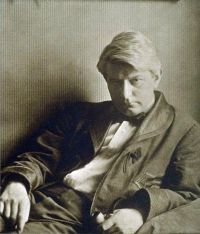
Frank Norris
Summary
Published in 1903, The Pit by Frank Norris is the second installment of his unfinished trilogy The Epic of the Wheat, following a California wheat crop’s journey to European markets. Set in Chicago’s volatile wheat trading pits, the novel focuses on Laura Dearborn, a beautiful and indecisive woman whose marriage to Curtis Jadwin falls apart as he becomes obsessively engrossed in speculative trading.
Exploring themes of selfishness, the destructive power of greed, and the fragility of love, Norris contrasts Laura’s self-centered desires with the more harmonious relationship between Laura’s sister Page and her husband Landry. Through Jadwin’s financial downfall and eventual redemption, the novel critiques individualism and the dehumanizing effects of capitalism.
Quotes from The pit (Frank Norris)
“ And, as if it were a realisation of his thought, there suddenly came to the ears of both the roll of wheels upon the asphalt under the carriage porch and the trampling of iron-shod hoofs. "Is that your husband?" Corthell's quick eye took in Laura's disarranged coiffure, one black lock low upon her neck, the roses at her shoulder crushed and broken, and the bright spot on either cheek. "Is that your husband?" "My husband—I don't know." She looked up at him with unseeing eyes. "Where is my husband? I have no husband. You are letting me remember," she cried, in terror. ”
