Summary

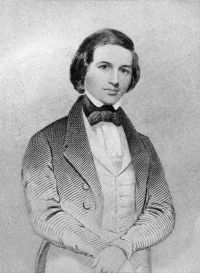
Portrait of T. S. Arthur T. S. Arthur,  Off-Hand Sketches, a Little Dashed with Humor

“ Well, how do you measure gentility?"
"By my ledger. A man who doesn't pay his tailor's bill, I consider no gentleman. If L—sends me a challenge, I will refuse to fight him on that ground."
"Good!" said Briarly, laughing. "I'm afraid, if your standard were adopted, that a great many, who now pass themselves off for gentlemen, would be held in little estimation."
"It is the true standard, nevertheless," replied Shears. "A man may try to be a gentleman as much as he pleases, but if he don't try to pay his tailor's bill at the same time, he tries in vain."
”
Source: Gutenberg

Portrait of T. S. Arthur T. S. Arthur,  Off-Hand Sketches, a Little Dashed with Humor

“ It happened, one day, that the tailor of Briarly asked him if he knew any thing about L—.
"Not much," replied Briarly. "Why do you ask?"
"Do you think him a gentleman?"
"How do you estimate a gentleman?" asked the young man.
"A gentleman is a man of honour," returned the tailor.
"Very well; then L—must be a gentleman, for he has a great deal to say about his honour."
"I know he has; but I find that those who talk much of their honour, don't, as a general thing, possess much to brag of."
”
Source: Gutenberg

Portrait of T. S. Arthur T. S. Arthur,  Off-Hand Sketches, a Little Dashed with Humor

“ Young ladies forgot their plain-faced, untitled, vulgar lovers, and put on their best looks and most winning graces for the count. For a time he carried all before him. Daily might he be seen in Chestnut street, gallanting some favoured belle, with the elegant air of a dancing-master, and the grimace of a monkey. Staid citizens stopped to look at him, and plain old ladies were half in doubt whether he were a man or a pongo.
At last the count's more particular attentions were directed toward Miss Arabella Jones, and from that time the favoured Glover found that his star had passed its zenith.
”
Source: Gutenberg

Get perspective with Kwize: daily news enlightened by great literature