Summary

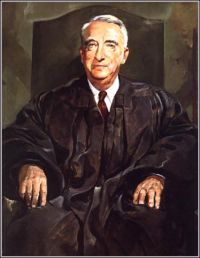
Portrait of Fred M. Vinson Fred M. Vinson Pope v. Atlantic Coast Line Railroad Company…

Congress has limited our power to review judgments from state courts lest the Court's jurisdiction be exercised in piecemeal proceedings to render advisory opinions. Were our reviewing power not limited to 'final' judgments, litigants would be free to come here and seek a decision on federal questions which, after later proceedings, might subsequently prove to be unnecessary and irrelevant to a complete disposition of the litigation.
Source: Wikisource

Portrait of Fred M. Vinson Fred M. Vinson Pope v. Atlantic Coast Line Railroad Company…

In the Kepner case, we held that a state court was not free to exercise its equity jurisdiction to enjoin a resident of the state from prosecuting a Federal Employers' Liability Act suit in a distant federal court. We reasoned that Congress had purposely given the employee a right to establish venue in the federal court where he had sued, and, what Congress had so expressly given, the courts should not take away.
The reference to the Kepner case in the Reviser's Note in nowise conflicts with what we think is the plain meaning of the language of § 1404 (a) itself.
Source: Wikisource

Portrait of Fred M. Vinson Fred M. Vinson Pope v. Atlantic Coast Line Railroad Company…

But petitioner has no other defense to interpose. He has been both explicit and free with his concession that his case rests upon his federal claim and nothing more. If the court below decided that claim correctly, then nothing remains to be done but the mechanical entry of judgment by the trial court. Thus, as the case comes to us, the federal question is the controlling question; 'there is nothing more to be decided.' [7] Under these particular circumstances, we have jurisdiction over the cause, Richfield Oil Corp.
Source: Wikisource

Get perspective with Kwize: daily news enlightened by great literature