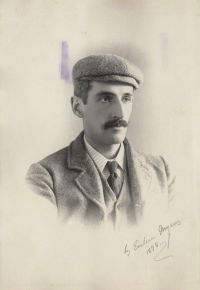
Frederick Cornwallis Conybeare

Frederick Cornwallis Conybeare

Summary

Portrait of Frederick Cornwallis Conybeare Frederick Cornwallis Conybeare 1911 Encyclopædia Britannica, Volume 6… (1911)

The earliest body of gospel tradition, represented by Mark no less than by the primitive non-Marcan document embodied in the first and third gospels, begins, not with the birth and childhood of Jesus, but with his baptism; and this order of accretion of gospel matter is faithfully reflected in the time order of the invention of feasts. The great church adopted Christmas much later than Epiphany; and before the 5th century there was no general consensus of opinion as to when it should come in the calendar, whether on the 6th of January, or the 25th of March, or the 25th of December.
Source: Wikisource

Portrait of Frederick Cornwallis Conybeare Frederick Cornwallis Conybeare 1911 Encyclopædia Britannica, Volume 6… (1911)

The general adoption of child baptism helped to extinguish the old view that the divine life in Jesus dated from his baptism, a view which led the Epiphany feast to be regarded as that of Jesus’ spiritual rebirth. This aspect of the feast was therefore forgotten, and its importance in every way diminished by the new and rival feast of Christmas. (2) The 4th century witnessed a rapid diffusion of Marcionite, or, as it was now called, Manichaean propaganda, the chief tenet of which was that Jesus either was not born at all, was a mere phantasm, or anyhow did not take flesh of the Virgin Mary.
Source: Wikisource

Get perspective with Kwize: daily news enlightened by great literature