Summary

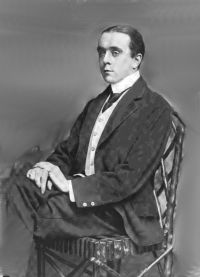
Portrait of Max Beerbohm Max Beerbohm A Christmas Garland — Christmas Day (1912)

Spiritually, Christmas Day recurs exactly seven times a week. When we have frankly acknowledged this, and acted on this, we shall begin to realise the Day's mystical and terrific beauty. For it is only everyday things that reveal themselves to us in all their wonder and their splendour. A man who happens one day to be knocked down by a motor-bus merely utters a curse and instructs his solicitor, but a man who has been knocked down by a motor-bus every day of the year will have begun to feel that he is taking part in an august and impressive ritual.
Source: Wikisource

Portrait of Max Beerbohm Max Beerbohm A Christmas Garland — Christmas Day (1912)

Looking back across the years, they saw in that dark and ungarnished manger only a shrinking woman, a brooding man, and a child born to sorrow. The philomaths of the eighteenth century, looking back, saw nothing at all. It is not the least of the glories of the Victorian era that it rediscovered Christmas. It is not the least of the mistakes of the Victorian era that it supposed Christmas to be a feast.
Source: Wikisource

Portrait of Max Beerbohm Max Beerbohm A Christmas Garland — Christmas Day (1912)

There is in the human race some dark spirit of recalcitrance, always pulling us in the direction contrary to that in which we are reasonably expected to go. At a funeral, the slightest thing, not in the least ridiculous at any other time, will convulse us with internal laughter. At a wedding, we hover mysteriously on the brink of tears. So it is with the modern Christmas. I find myself in agreement with the cynics in so far that I admit that Christmas, as now observed, tends to create melancholy.
Source: Wikisource

Get perspective with Kwize: daily news enlightened by great literature