Summary

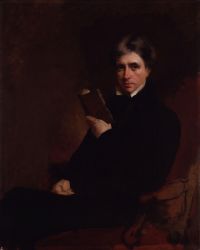
Portrait of Leigh Hunt Leigh Hunt Our American Holidays - Christmas (1949)

Ay, and joy too; for all people have their joys as well as troubles, at one time or another,—most likely both together, or in constant alternation: and the greater part of troubles are not the worst things in the world, but only graver forms of the requisite motion of the universe, or workings towards a better condition of things, the greater or less violent according as we give them violence, or respect them like awful but not ill-meaning gods, and entertain them with a rewarded patience. Grave thoughts, you will say, for Christmas.
Source: Wikisource

Portrait of Leigh Hunt Leigh Hunt Our American Holidays - Christmas (1949)

We love an exquisite fitness,—a might and wealth of adaptation) . Why, the whole round cheek of universal childhood is in the idea of plum-pudding; ay, and the weight of manhood, and the plenitude of the majesty of city dames. Wealth itself is symbolized by the least of its fruity particles. "A plum" is a city fortune,—a million of money. He (the old boy, who has earned it) —
"Puts In his thumb,
videlicet, into his pocket,
And pulls out a plum,
And says. What a good man am I!"
Observe a little boy at a Christmas-dinner, and his grandfather opposite him.
Source: Wikisource

Get perspective with Kwize: daily news enlightened by great literature