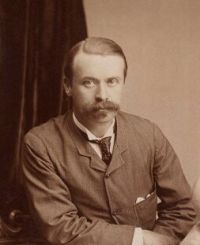
Freeman Marius O'Donoghue

Freeman Marius O'Donoghue

Summary

Portrait of Freeman Marius O'Donoghue Freeman Marius O'Donoghue Dictionary of National Biography… (1899)

From an early period Vertue was ardently devoted to antiquarian research, and by his incessant and conscientious labours in this field he has earned enduring fame. Obtaining the patronage of the Earl of Oxford, Lord Coleraine, and other noblemen of similar tastes, he travelled in their company through many parts of England, visiting the great country houses and other places of interest, and making careful notes and drawings of everything of artistic and antiquarian value that he met with, and his engravings of these subjects are almost as numerous as his portraits.
Source: Wikisource

Portrait of Freeman Marius O'Donoghue Freeman Marius O'Donoghue Dictionary of National Biography… (1890)

His first attempts at studying from nature were so unpromising that for a time he abandoned the idea of becoming a painter, and his father articled him to Charles Pye, an engraver. Engraving proved distasteful to him, and having by perseverance overcome his original difficulties, he left Pye at the end of a year, and settled down to the practice of water-colour painting. At the age of eighteen he was awarded a silver medal by the Society of Arts.
Source: Wikisource

Portrait of Freeman Marius O'Donoghue Freeman Marius O'Donoghue Dictionary of National Biography… (1891)

While he was engaged in executing for the Duke of Dorset a series of miniatures from family portraits at Knole to decorate a cabinet, his eyesight gave way, and, compelled to abandon miniature work, he turned to crayon drawing. At Knole there is a portrait of the Duke of Dorset, which is inscribed on the back, 'The first portrait in crayons painted by Ozias Humphry, R. A.; it was begun in May and finished early in June 1791.' Humphry quickly became one of the ablest workers in crayons.
Source: Wikisource

Get perspective with Kwize: daily news enlightened by great literature