Summary

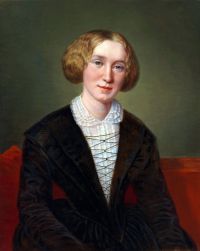
Portrait of George Eliot George Eliot The Mill on the Floss — Book 1… (1860)

Life did change for Tom and Maggie; and yet they were not wrong in believing that the thoughts and loves of these first years would always make part of their lives. We could never have loved the earth so well if we had had no childhood in it,–if it were not the earth where the same flowers come up again every spring that we used to gather with our tiny fingers as we sat lisping to ourselves on the grass
Source: Wikisource

Portrait of George Eliot George Eliot The Mill on the Floss — Book 1… (1860)

We learn to restrain ourselves as we get older. We keep apart when we have quarrelled, express ourselves in well-bred phrases, and in this way preserve a dignified alienation, showing much firmness on one side, and swallowing much grief on the other. We no longer approximate in our behavior to the mere impulsiveness of the lower animals, but conduct ourselves in every respect like members of a highly civilized society. Maggie and Tom were still very much like young animals, and so she could rub her cheek against his, and kiss his ear in a random sobbing way
Source: Wikisource

Portrait of George Eliot George Eliot The Mill on the Floss — Book 1… (1860)

These bitter sorrows of childhood! when sorrow is all new and strange, when hope has not yet got wings to fly beyond the days and weeks, and the space from summer to summer seems measureless.
Maggie soon thought she had been hours in the attic, and it must be tea-time, and they were all having their tea, and not thinking of her. Well, then, she would stay up there and starve herself,–hide herself behind the tub, and stay there all night,–and then they would all be frightened, and Tom would be sorry. Thus Maggie thought in the pride of her heart, as she crept behind the tub
Source: Wikisource

Get perspective with Kwize: daily news enlightened by great literature