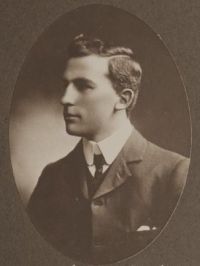
George Reginald Marriner

George Reginald Marriner

Summary

Portrait of George Reginald Marriner George Reginald Marriner The Kea: a New Zealand problem (1908)

When spring comes there is a change, but only doubtfully for the better. The biting blasts give place to the warmer winds from the north west. These come over the Tasman Sea, getting charged with moisture on the way, until they strike the rampart of alpine peaks and pour their burden on the snow. At night the scene is weirdly grand. The lightning plays among the rocky crests, darting fiery fingers again and again down into the valleys. A veritable cannonade of thunder shakes the mountain slopes, while sleet and hail sweep ruthlessly everywhere.
Source: Wikisource

Portrait of George Reginald Marriner George Reginald Marriner The Kea: a New Zealand problem (1908)

Above, the craggy peaks pierce a sky of exquisite blue; while under foot the sub-alpine flora, in all its quaint beauty, forms a carpet of cushion-like plants, dotted over with small white flowers, like so many stars shining in an emerald sky. Away from the heat of the valley, with a wide, grand outlook and a life-giving atmosphere, the bird has surroundings to be coveted. Sometimes it rises and circles the snowy peaks, but more often it swoops down to where the forest and river-bed meet, and revels among the foliage.
Source: Wikisource

Portrait of George Reginald Marriner George Reginald Marriner The Kea: a New Zealand problem (1908)

It is at this time that the Kea finds them an easy prey, and many a bloody battlefield, the snow being deeply tinged with red, shows where the helpless benumbed sheep have been literally torn to pieces while alive by the relentless birds. Even when men, wading waist high in the snow, climb up to dig the sheep out, the brutal birds will often not leave their prey, but fall victims to the musterer’s alpenstock.
Source: Wikisource

Get perspective with Kwize: daily news enlightened by great literature