Summary

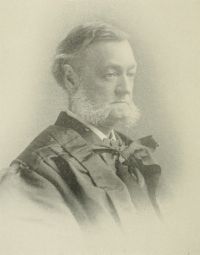
Portrait of George Shiras, Jr. George Shiras, Jr. Easton v. Iowa — Opinion of the Court

The act of 1860, if applied to national banks, imposes a disqualification upon cashiers of such institutions where none has been imposed by act of Congress. If the state may impose one qualification upon the cashiers, why not another? If upon the cashier, why not upon the president or other officer? Nay, further, suppose the legislature should declare that no person should be a bank director unless he has arrived at fifty years of age, or should be the owner of one hundred shares of stock, could we apply such an act to national banks? If so, such institutions would have a precarious existence.
Source: Wikisource

Portrait of George Shiras, Jr. George Shiras, Jr. Easton v. Iowa — Opinion of the Court

Nor can we concede that by such legislation of a state as was attempted in this instance, the affairs of a national bank, or the security of its creditors, would be advantageously affected. The provision of the state statute is express that it is the duty of the officers of the bank, when they know it is insolvent, to at once suspend its active operations; for it is obvious that to refuse to accept deposits would be equivalent to a cessation of business. Whether a bank is or is not actually insolvent may be, often, a question hard to answer.
Source: Wikisource

Get perspective with Kwize: daily news enlightened by great literature