Summary

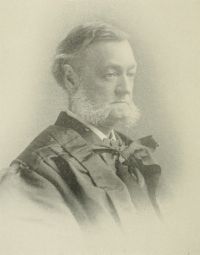
Portrait of George Shiras, Jr. George Shiras, Jr. Louisville Nashville Railroad Company v…

Nor, as we have already seen, is it for us to say that the court of appeals of Kentucky erred in so construing that enactment as to forbid a railroad company from justifying a voluntary disregard of its command by claiming that competition between its road and other modes of transportation created substantially dissimilar circumstances and conditions.
It does not call for argument that railroad companies are incorporated to perform a public service, and that it is for the state to define their powers and to control their exercise of such powers.
Source: Wikisource

Portrait of George Shiras, Jr. George Shiras, Jr. Louisville Nashville Railroad Company v…

What we now say is that a state corporation voluntarily formed cannot exempt itself from the control reserved to itself by the state by its Constitution, and that the plaintiff in error, if not protected by a valid contract, cannot successfully invoke the interposition of the Federal courts, in respect to the long and short haul clause in the state Constitution, on the ground simply that the railroad is property. Nor is there any foundation for the objection that the provision in question denies to the plaintiff in error the equal protection of the laws.
Source: Wikisource

Portrait of George Shiras, Jr. George Shiras, Jr. Louisville Nashville Railroad Company v…

When the citizens of Kentucky voluntarily seek and obtain a grant from the state of a charter to build and maintain a public highway in the form of a railroad, it would seem to be evident that it takes, holds, and operates its road subject to the constitutional inhibition we are considering, and are without power to challenge its validity.
Source: Wikisource

Get perspective with Kwize: daily news enlightened by great literature