Summary

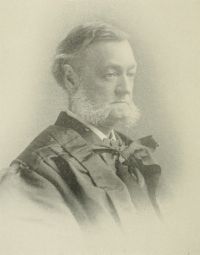
Portrait of George Shiras, Jr. George Shiras, Jr. Lucas v. United States — Opinion of the Court

It is certainly a correct rule of law, when you come to an exception of that character, when you find a man who is a negro by blood said to be such, and there was no controversy over that, and the government proves that fact, that makes a prima facie case of jurisdiction, because it shows that he belonged to a race that, as a rule, are not of the Indian race, and they are only of such Indian race by adoption.
Source: Wikisource

Portrait of George Shiras, Jr. George Shiras, Jr. Lucas v. United States — Opinion of the Court

We understand the learned judge to have assumed that the presumption was that Kemp was not a member of the Choctaw tribe, and to have so instructed the jury. His language on this subject was as follows:
'In the first place, you are required to find that Kemp, the man killed, or the unknown man, if you should believe his name has not been established, was a negro, and not an Indian. That means he was a citizen of the United States. That means that the court has jurisdiction of the case under the law. You may find that proposition by circumstances, as well as by what is called 'positive proof.
Source: Wikisource

Get perspective with Kwize: daily news enlightened by great literature