Summary

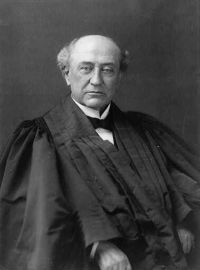
Portrait of David Josiah Brewer David Josiah Brewer Westmoreland v. United States…

So, also, it is unnecessary to aver that the poison was taken into the stomach of the deceased. The crime would be complete if the poison was by hypodermic injection, or otherwise, introduced into the body of the deceased, and, affecting the heart or other organ, caused the death. The indictment need not specify in detail the mode in which the poison affected the body, or the particular organ upon which its operation was had. It is enough to charge that poison was administered, and that such poison, so administered, caused the death.
Source: Wikisource

Portrait of David Josiah Brewer David Josiah Brewer Westmoreland v. United States…

But it is charged that the defendant and the deceased were not 'citizens of the Indian Territory.' Force must be given to this term in the indictment, and, while it may be conceded that it is not the most apt to describe citizenship in an Indian tribe, yet it is not an unreasonable construction to hold that it refers to all citizenship which could possibly be acquired in the Indian Territory, including therein citizenship in any Indian tribe domiciled within such limits.
Source: Wikisource

Portrait of David Josiah Brewer David Josiah Brewer Westmoreland v. United States…

But it is insisted that article 38 of the treaty with the Choctaws and Chickasaws, of April 28, 1866 (14 Stat. 779) , provides that 'every white person who, having married a Choctaw or Chickasaw, resides in the said Choctaw or Chickasaw Nation, or who has been adopted by the legislative authorities, is to be deemed a member of said nation, and shall be subject to the laws of the Choctaw and Chickasaw Nations according to his domicile, and to prosecution and trial before their tribunals, and to punishment according to their laws in all respects as though he was a native Choctaw or Chickasaw'
Source: Wikisource

Get perspective with Kwize: daily news enlightened by great literature