Summary

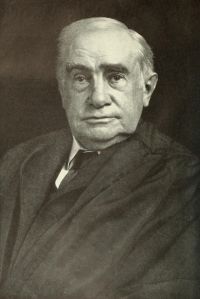
Portrait of Henry Billings Brown Henry Billings Brown Ex parte Mayfield — Opinion of the Court

It is needless to say that the fact, if it be a fact, that the laws of the Cherokees make no provision for the punishment of the crime of adultery, would not extend to the courts of the United States a power to punish this crime that did not otherwise exist. As Mayfield was a member of the Cherokee Nation by adoption, if not by nativity, and was the sole party to these proceedings, we think it is clear that under the treaties and acts of congress he is amenable only to the courts of the nation, and that his petition should be granted.
Source: Wikisource

Portrait of Henry Billings Brown Henry Billings Brown Ex parte Mayfield — Opinion of the Court

The seventh article reads as follows: 'The United States court to be created in the Indian Territory, and, until such court is created therein, the United States district court, the nearest to the Cherokee Nation, shall have exclusive original jurisdiction of all causes, civil and criminal, wherein an inhabitant of the district hereinbefore described shall be a party, and where an inhabitant outside of said district, in the Cherokee Nation, shall be the other party, as plaintiff or defendant in a civil cause, or shall be defendant or prosecutor in a criminal case,' etc.
Source: Wikisource

Portrait of Henry Billings Brown Henry Billings Brown Ex parte Mayfield — Opinion of the Court

Rogers, 4 How. 567, that the Indian tribes residing within the territorial limits of the United States are subject to their authority, and, where the country occupied by them is not within the limits of any one of the states, congress may, by law, punish any offense committed there, no matter whether the offender be a white man or an Indian.
Source: Wikisource

Get perspective with Kwize: daily news enlightened by great literature