Summary

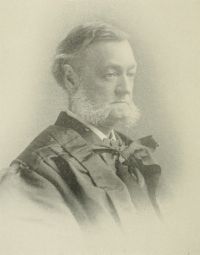
Portrait of George Shiras, Jr. George Shiras, Jr. Mallett v. North Carolina — Opinion of the Court

Remedies must always be under the control of the legislature, and it would create endless confusion in legal proceedings if every case was to be conducted only in accordance with the rules of practice, and heard only by the courts in existence when its facts arose. The legislature may abolish courts and create new ones, and it may prescribe altogether different modes of procedure in its discretion, though it cannot lawfully, we think, in so doing, dispense with any of those substantial protections with which the existing law surrounds the person accused of crime.' Chap.
Source: Wikisource

Portrait of George Shiras, Jr. George Shiras, Jr. Mallett v. North Carolina — Opinion of the Court

But alterations which do not increase the punishment nor change the ingredients of the offense, or the ultimate facts necessary to establish guilt, but, leaving untouched the nature of the crime and the amount or degree of proof essential to conviction, only remove existing restrictions upon the competency of certain classes of persons as witnesses, relate to modes of procedure only, in which no one can be said to have a vested right, and which the state, upon grounds of public policy, may regulate at pleasure.
Source: Wikisource

Portrait of George Shiras, Jr. George Shiras, Jr. Mallett v. North Carolina — Opinion of the Court

There remains to consider the contention that, in the trial in the criminal court, by the use of certain books of account belonging to them, the plaintiffs in error were thereby made to be witnesses against themselves, and thus their privileges and immunities as citizens of the United States have been abridged, and they are deprived of their liberty without due process of law, contrary to the 14th Amendment to the Constitution of the United States.
Source: Wikisource

Get perspective with Kwize: daily news enlightened by great literature