Summary

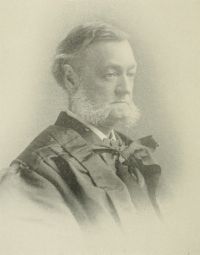
Portrait of George Shiras, Jr. George Shiras, Jr. Southern Pacific Company v. Seley…

The employe was no boy, placed by the employer in a position of undisclosed danger, but a mature man, doing the ordinary work which he had engaged to do; and, when risks in this respect were obvious to any one, under those circumstances he assumed the risk of such an accident as this, and no negligence can be imputed to the employer.'
That Seley was guilty of contributory negligence, and therefore not entitled to recover, we think is also obvious.
Source: Wikisource

Portrait of George Shiras, Jr. George Shiras, Jr. Southern Pacific Company v. Seley…

But the plaintiff had used the same kind of a machine for thirteen years, and had sustained no injury. In these circumstances we can see no evidence of any defect in the condition of the machine, even apart from the negligence of the employe. It may be that a solid wheel would have been safer, but it would be placing an intolerable burden on employers to hold that they are to adopt every fresh improvement in machinery. * * * It seems to us that in this case there is not a particle of evidence of any defect arising from the negligence of the employer.
Source: Wikisource

Portrait of George Shiras, Jr. George Shiras, Jr. Southern Pacific Company v. Seley…

The theory upon which the plaintiff proceeded in the court below was that Seley lost his life by reason of the negligence of the defendant, a railroad company, in using in its switches what is called an 'unblocked frog.'
A frog, in railroad parlance, is a section of a rail, or of several rails combined, at a point where two railways cross, or at the point of a switch from a line to a siding or to another line, and its function is to enable a car or train to be turned from one track to another.
Source: Wikisource

Get perspective with Kwize: daily news enlightened by great literature