Summary

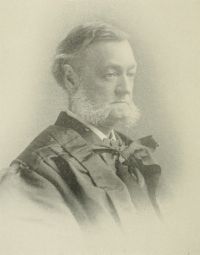
Portrait of George Shiras, Jr. George Shiras, Jr. Thompson v. United States (155 U.S. 271…

If they are satisfied from the law and the testimony that the deceased was not doing anything that amounted to a deadly attack, or there is no question in their minds as to what the attitude of the deceased was, previous threats cannot be considered by them; they cannot enter into their consideration of the case by the way of justifying any act that resulted in the death of Charles Hermes from the act of defendant; they cannot be considered, I say, because you cannot kill a man because of previous threats. You cannot weigh in the balance a human life against a threat.
Source: Wikisource

Portrait of George Shiras, Jr. George Shiras, Jr. Thompson v. United States (155 U.S. 271…

It cannot grow out of any base conception of fear. It cannot grow out of a state of case where there is a killing because of threats previously made, because of that which evidences special spite or ill will, for, if the killing is done on that ground, and if it is shown by the threats, and the previous preparation of the defendant, or the fact of his arming himself, and going back to the field where they were at work, and while there he shot Charles Hermes to death, it cannot be evidence of that condition
Source: Wikisource

Portrait of George Shiras, Jr. George Shiras, Jr. Thompson v. United States (155 U.S. 271…

Manslaughter is defined by the law of the United States to be the wrongful killing of a human being, done willfully, and in the absence of malice aforethought. There must be out of the case that which shows the existence of this distinguishing trait of murder, to find the existence of a state of case that authorizes a mitigation of the offense from murder to manslaughter. It is an unlawful and willful killing, but a killing in such a way as that the conduct of the deceased.
Source: Wikisource

Get perspective with Kwize: daily news enlightened by great literature