Summary

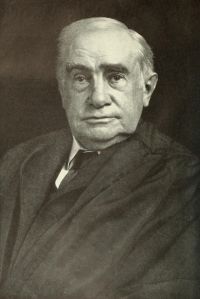
Portrait of Henry Billings Brown Henry Billings Brown Allen v. United States, 164 U.S. 492…

The party who is killed, at the time of the killing, must offer some provocation to produce a certain condition of mind. Now, what is the character of that provocation that can be recognized by the law as being sufficient to reduce the grade of the crime from murder to manslaughter? He cannot produce it by mere words, because mere words alone do not excuse even a simple assault. Any words offered at the time do not reduce the grade of the killing from murder to manslaughter.
Source: Wikisource

Portrait of Henry Billings Brown Henry Billings Brown Allen v. United States, 164 U.S. 492…

While, undoubtedly, the verdict of the jury should represent the opinion of each individual juror, it by no means follows that opinions may not be changed by conference in the jury room. The very object of the jury system is to secure unanimity by a comparison of views, and by arguments among the jurors themselves. It certainly cannot be the law that each juror shoud not listen with deference to the arguments, and with a distrust of his own judgment, if he finds a large majority of the jury taking a different view of the case from what he does himself.
Source: Wikisource

Portrait of Henry Billings Brown Henry Billings Brown Allen v. United States, 164 U.S. 492…

United States, 160 U.S. 408, 422, where the same question, as to the weight to be given to flight as evidence of guilt, arose, the court charged the jury that: "The law recognizes another proposition as true, and it is that 'the wicked flee when no man pursueth, but the innocent are as bold as a lion.' That is a self-evident proposition that has been recognized so often by mankind that we can take it as an axiom, and apply it to this case."
Source: Wikisource

Get perspective with Kwize: daily news enlightened by great literature