Summary

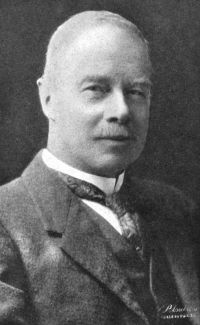
Portrait of George Vernon Hudson George Vernon Hudson An Elementary Manual of New Zealand Entomology… (1892)

When full fed, this caterpillar fastens its case to a branch with a loop of strong silk, which is drawn very tight, preventing the case from swinging when the plant is moved by the wind, and also rendering the insect's habitation more inconspicuous, by causing it to resemble a broken twig. The anterior aperture is completely closed, the loose edges being drawn together and fastened like a bag.
Source: Wikisource

Portrait of George Vernon Hudson George Vernon Hudson An Elementary Manual of New Zealand Entomology… (1892)

Previous to this change the pupa works its way up the vertical tunnel, lifts the trap-door, which yields to the slightest pressure from within, and wriggles along the horizontal burrow until it reaches the air, the last three or four segments only remaining in the tree. The thoracic shield then ruptures, and the moth crawls out and expands its wings in the ordinary way, resting on the trunk of the tree until they are of sufficient strength and hardness for flight.
The perfect insect, although it must be common, is very rarely seen.
Source: Wikisource

Portrait of George Vernon Hudson George Vernon Hudson An Elementary Manual of New Zealand Entomology… (1892)

At night the larvæ may be seen busily engaged: they project the head and first four segments of the body beyond the case, and walk about with considerable rapidity, often lowering themselves by means of silken threads; the only locomotive organs are, of course, their strong thoracic legs, which appear to easily fulfil their double function of moving both larva and case. If disturbed, these insects at once retreat into their cases closing the anterior aperture with a silken cord which is kept in readiness for the purpose, and pulled from the inside by the retreating larva.
Source: Wikisource

Get perspective with Kwize: daily news enlightened by great literature