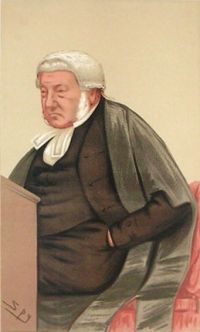
George William Wilshere Bramwell

George William Wilshere Bramwell

Summary

Portrait of George William Wilshere Bramwell George William Wilshere Bramwell Employers' liability (1880)

I say, then, that the proposal to make the master liable to a servant for the negligence of a fellow servant, is contrary to principle, unjust, unreasonable, and calculated to produce, if not no good, at least more harm than good. It would be better to make servants liable to their masters for the damage caused by their fellows, than to make masters liable to them as proposed.
Source: Wikisource

Portrait of George William Wilshere Bramwell George William Wilshere Bramwell Employers' liability (1880)

The present claim for liability, I repeat, arises from the workman not appreciating that he receives the premium now, and yet would make the master the insurer.
The great employers of labour will understand the change in the law and guard against it. The mischief and wrong will be in the case of men who, not knowing of the change, will go on paying the wages which include the compensation for risk, the premium of insurance, and yet find they have to pay compensation when the risk happens, and that they are insurers though they have not received the premium.
Source: Wikisource

Portrait of George William Wilshere Bramwell George William Wilshere Bramwell Employers' liability (1880)

It has been said the servant contracts himself out of the right to compensation. It would be better to say he does not contract himself into it. He can if he and his master agree. Nay, he can stipulate for compensation where there is no negligence. He does not contract that his case shall be an exception to the general rule that a man is not liable for the acts of another. There is no injustice in this. There is in the proposition the other way. For no one can doubt that the dangers of an employment are taken into account in its wages.
Source: Wikisource

Get perspective with Kwize: daily news enlightened by great literature