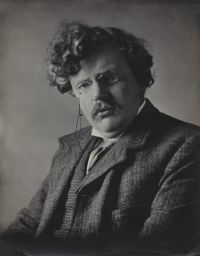
Gilbert Keith Chesterton

Gilbert Keith Chesterton

Summary

Portrait of Gilbert Keith Chesterton Gilbert Keith Chesterton The Apostle and the Wild Ducks… (1975)

Shelley hated kings as all aristocrats hated kings; the feud between them has flamed since the beginning of the world. Shelley hated priests, and hated them most of all; for priests represent a startling and supernatural denial of the gradations of mankind; an aristocracy can submit to a king or humour a democracy, but another aristocracy is too much for them. Of course, Shelley, a man of quite crystalline sincerity, did not know that his anarchism had this feudal foundation; he imagined, I have no doubt, that he was a veritable voice of the people.
Source: Wikisource

Portrait of Gilbert Keith Chesterton Gilbert Keith Chesterton The Apostle and the Wild Ducks… (1975)

We can compare him with another poet, another democratic idealist, another man moved by the French Revolution, living almost in Shelley's time, and almost in Shelley's country, a man who differed from Shelley in nothing except that he was really a man of the people. To think of him after Shelley is like swallowing fire after swallowing water. It is not so easy to get out of one's mouth the stinging taste of the sweetness and bitterness of Burns.
Source: Wikisource

Portrait of Gilbert Keith Chesterton Gilbert Keith Chesterton The Apostle and the Wild Ducks… (1975)

When I call Shelley a typical aristocrat; I have fully in remembrance all his revolutionary ardour and his almost anarchic ideality; I do not call Shelley an aristocrat in spite of these things; I call him an aristocrat because of them. The true aristocrat is by nature an anarchist. The aristocrat was and is the person desiring to do as he liked. His castle was a defiance of the decent orders of the king. His motorcar was a defiance of the decent orders of the democracy. The gentlemen of real history were never anything but rowdy.
Source: Wikisource

Get perspective with Kwize: daily news enlightened by great literature