Summary

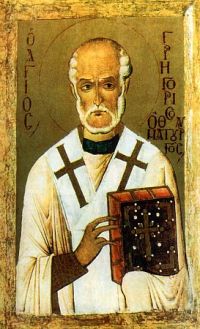
Portrait of Gregory Thaumaturgus Gregory Thaumaturgus Ante-Nicene Fathers Vol. VI, Acknowledged Writings… (1885)

Wherefore, having pondered at once the advantages of wisdom and the ills of folly, I should with reason admire that man greatly, who, being borne on in a thoughtless course, and afterwards arresting himself, should return to right and duty. For wisdom and folly are widely separated, and they are as different from each other as day is from night. He, therefore, who makes choice of virtue, is like one who sees all things plainly, and looks upward, and who holdeth his ways in the time of clearest light.
Source: Wikisource

Portrait of Gregory Thaumaturgus Gregory Thaumaturgus Ante-Nicene Fathers Vol. VI, Acknowledged Writings… (1885)

For what advantage is there in those thoughts, or what profit is there in the multitude of words, where the streams of foolish speaking are flowing, as it were, from the fountain of folly? Moreover, there is nothing common to the wise man and to the fool, neither as regards the memory of men, nor as regards the recompense of God. And as to all the affairs of men, when they are yet apparently but beginning to be, the end at once surprises them. Yet the wise man is never partaker of the same end with the foolish.
Source: Wikisource

Portrait of Gregory Thaumaturgus Gregory Thaumaturgus Ante-Nicene Fathers Vol. VI, Acknowledged Writings… (1885)

But the good man who gets wisdom from God, gets also heavenly enjoyment; while, on the other hand, the evil man, smitten with ills divinely inflicted, and afflicted with the disease of lust, toils to amass much, and is quick to put him to shame who is honoured by God in presence of the Lord of all, proffering useless gifts, and making things deceitful and vain the pursuits of his own miserable soul.
Source: Wikisource

Get perspective with Kwize: daily news enlightened by great literature