Summary

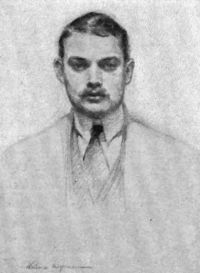
Portrait of Guy Wetmore Carryl Guy Wetmore Carryl Zut and Other Parisians — Papa Labesse (1903)

Suddenly Marcelle began to speak, her voice eloquent with a strange, new music.
“Papa Labesse, dost thou comprehend what all this says to us, this wonderful city upon which we look each night, thou and I? From here — what? A bewilderment of lights, a sea of roofs, a murmur of faintly heard cries. But what does it mean? Surely, it is the voice of the mother of us all, of Paris, the great, the beautiful — of a woman, Papa Labesse: that finally, which thou canst never comprehend, pauvre Papa Labesse! — a woman who says but one word — love! Papa Labesse — L’amour, l’amour, l’amour!
Source: Wikisource

Portrait of Guy Wetmore Carryl Guy Wetmore Carryl Zut and Other Parisians — Papa Labesse (1903)

It was at this time that two radical changes came into the life of Papa Labesse. First, on the very summit of the Butte they began to lay the foundations for the great church of Sacré-Cœur; and, second, Marcelle took it into her pretty little head to accompany him on his daily climb. At first he was disturbed by both these innovations. This curious afternoon communion of his with the wonderful wide city, which lay spread out before him like a great gray map, was akin to a religion. He loved Paris with a love so great that perhaps he himself was barely able to comprehend its proportions.
Source: Wikisource

Portrait of Guy Wetmore Carryl Guy Wetmore Carryl Zut and Other Parisians — Papa Labesse (1903)

Marcelle was the daughter of Madame Clapot, who presided over a little dairy directly opposite the joiner’s shop, and on the day when she first made the astounding discovery that small girls can stand upright and walk alone, as if by instinct she had made a bee-line for the doorway of Papa Labesse, and, staggering in, triumphant, had fallen headlong, with a gurgle of satisfaction, into a great pile of shavings.
Source: Wikisource

Get perspective with Kwize: daily news enlightened by great literature