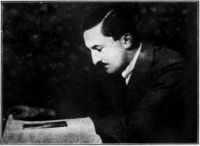
H. C. McNeile

H. C. McNeile

Summary

Portrait of H. C. McNeile H. C. McNeile The seven missionaries (1923)

Then there came a heavy thud from just above us, and I saw Jenkins, the wireless man, pitch forward on his face half in and half out of his cabin door. He lay there sprawling, while another of the parsons proceeded to wreck his instruments with the iron bar which he had used to stun the operator. Just then, with a squawk of terror like an anguished hen, Mrs. Armstrong rose to her feet, and with her pink parasol in one hand and her rug in the other fled toward the bow of the ship. She looked so irresistibly funny—this large, hysterical woman—that I couldn’t help it, I laughed.
Source: Gutenberg

Portrait of H. C. McNeile H. C. McNeile The seven missionaries (1923)

The skipper was called away on some matter, and Jim and I strolled back past the two parsons. They both looked up at us with mild interest as we passed, but neither of them gave the faintest sign of recognition.
Now that did strike me as strange. A Clergyman may swear if he likes, but why in the name of fortune he should utterly ignore a man whom he evidently knew was beyond me.
“Come and lean over the side, Jim,” I said, when we were out of earshot. “I want to tell you something funny. Only don’t look around.”
Source: Gutenberg

Portrait of H. C. McNeile H. C. McNeile The seven missionaries (1923)

Jim paused and took a drink, then lit a cigarette thoughtfully.
“I don’t think that I have ever seen a man in quite such a dreadful rage as Kelly was,” he went on gravely. “There was a clockwork mechanism which could be started by turning a screw on the outside of each box, and the whole diabolical plan was as clear as daylight. There was enough stuff there to sink a fleet of battleships, and when they had cleared off in the yacht with the gold we should suddenly have split in two and gone down with every soul on board.
Source: Gutenberg

Get perspective with Kwize: daily news enlightened by great literature