Summary

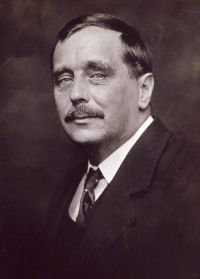
Portrait of H. G. Wells H. G. Wells The History of Mr. Polly

It all merged with the effect of Miriam in Mr. Polly’s mind.
Her thoughts found speech. “One did ought to be happy in a shop,” she said with a note of unusual softness in her voice.
It seemed to him that she was right. One did ought to be happy in a shop. Folly not to banish dreams that made one ache of townless woods and bracken tangles and red-haired linen-clad figures sitting in dappled sunshine upon grey and crumbling walls and looking queenly down on one with clear blue eyes. Cruel and foolish dreams they were, that ended in one’s being laughed at and made a mock of.
Source: Gutenberg

Portrait of H. G. Wells H. G. Wells The History of Mr. Polly

Polly fell in love, as though the world had given way beneath him and he had dropped through into another, into a world of luminous clouds and of desolate hopeless wildernesses of desiring and of wild valleys of unreasonable ecstasies, a world whose infinite miseries were finer and in some inexplicable way sweeter than the purest gold of the daily life, whose joys—they were indeed but the merest remote glimpses of joy—were brighter than a dying martyr’s vision of heaven. Her smiling face looked down upon him out of heaven, her careless pose was the living body of life.
Source: Gutenberg

Portrait of H. G. Wells H. G. Wells The History of Mr. Polly (1909)

Polly sat beside the fat woman at one of the little green tables at the back of the Potwell Inn, and struggled with the mystery of life. It was one of those evenings, serenely luminous, amply and atmospherically still, when the river bend was at its best. A swan floated against the dark green masses of the further bank, the stream flowed broad and shining to its destiny, with scarce a ripple—except where the reeds came out from the headland—the three poplars rose clear and harmonious against a sky of green and yellow.
Source: Wikisource

Get perspective with Kwize: daily news enlightened by great literature