Summary

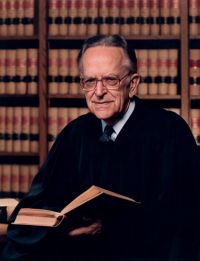
Portrait of Harry Blackmun Harry Blackmun Britt v. North Carolina — Concurrence

The provision in North Carolina permitting defendants to purchase mistrial minutes is obviously an important exception to the common-law prohibition. A mistrial transcript contains not only prosecution witnesses' names and addresses but their stories under oath and it contains the entire theory of the government's case. Such a document is a complete dossier of the opposing case for which even the most liberalized rules of civil discovery have no equivalent.
Source: Wikisource

Portrait of Harry Blackmun Harry Blackmun Britt v. North Carolina — Concurrence

In criminal proceedings long experience has taught the courts that often discovery will lead not to honest factfinding, but on the contrary to perjury and the suppression of evidence. Thus the criminal who is aware of the whole case against him will often procure perjured testimony in order to set up a false defense. * * * Another result of full discovery would be that the criminal defendant who is informed of the names of all the State's witnesses may take steps to bribe or frighten them into giving perjured testimony or into absenting themselves so that they are unavailable to testify.
Source: Wikisource

Portrait of Harry Blackmun Harry Blackmun Britt v. North Carolina — Concurrence

When viewed in the broader context of a defendant's complete lack of criminal discovery procedures, the importance of a mistrial transcript becomes even clearer. Many commentators have criticized the persistent common-law prohibition against discovery by criminal defendants, characterizing present systems as 'sporting theories of justice' and complaining of the vast advantage enjoyed by the prosecution in the marshaling of evidence.
Source: Wikisource

Get perspective with Kwize: daily news enlightened by great literature