Summary

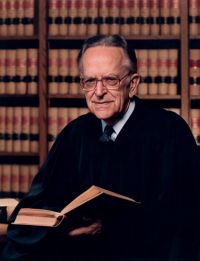
Portrait of Harry Blackmun Harry Blackmun Pauley v. Bethenergy Mines Inc…

Similarly, litigation over the causal link between the disease and the disability-which poses even more difficult medical questions-was eliminated entirely by the presumption that if a miner had pneumoconiosis and was disabled, he was disabled because of pneumoconiosis. On the other hand, the regulations permitted full litigation as to the existence of a disability, an area where medical and scientific knowledge was equal to the task and where agencies (and courts) typically think themselves able to make reasoned assessments.
Source: Wikisource

Portrait of Harry Blackmun Harry Blackmun Pauley v. Bethenergy Mines Inc…

The only serious question surrounds the regulations of the then-extant Department of Health, Education, and Welfare (HEW) to which the statute refers. I agree that those regulations are complex, perhaps even "Byzantine," ante, at 699-but that alone is insufficient to invoke Chevron deference. Deference is appropriate where the relevant language, carefully considered, can yield more than one reasonable interpretation, not where discerning the only possible interpretation requires a taxing inquiry.
Source: Wikisource

Portrait of Harry Blackmun Harry Blackmun Pauley v. Bethenergy Mines Inc…

In sum, the DOL regulations impermissibly exceed the HEW regulations in at least two respects: (1) they allow employers to argue that a miner who has pneumoconiosis and is disabled is nevertheless not disabled due to the pneumoconiosis, and (2) where a miner has submitted specified evidence of a chronic dust disease, they allow the employer to challenge not only whether the disease is coal-related, but whether the disease exists. That was the view of these regulations we expressed in Pittston Coal, see 488 U.S., at 111, 109 S.Ct., at 418, and I see no reason to reconsider.
Source: Wikisource

Get perspective with Kwize: daily news enlightened by great literature