Summary

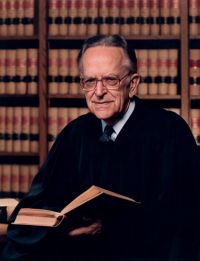
Portrait of Harry Blackmun Harry Blackmun Sullivan v. Zebley — Opinion of the Court

He argues, instead, that the listings-only approach is the only practicable way to determine whether a child's impairment is "comparable" to one that would disable an adult. An individualized, functional approach to child-disability claims like that provided for adults is not feasible, the Secretary asserts, since children do not work; there is no available measure of their functional abilities analogous to an adult's ability to work, so the only way to measure "comparable severity" is to compare child claimants' medical evidence with the standard of severity set by the listings.
Source: Wikisource

Portrait of Harry Blackmun Harry Blackmun Sullivan v. Zebley — Opinion of the Court

The reason for this difference between the listings' level of severity and the statutory standard is that, for adults, the listings were designed to operate as a presumption of disability that makes further inquiry unnecessary. That is, if an adult is not actually working and his impairment matches or is equivalent to a listed impairment, he is presumed unable to work and is awarded benefits without a determination whether he actually can perform his own prior work or other work.
Source: Wikisource

Portrait of Harry Blackmun Harry Blackmun Sullivan v. Zebley — Opinion of the Court

Under the Secretary's regulations and rulings, both widows and children qualify for benefits only if the medical evidence of their impairments meets or equals a listing. SSR 83-19, at 93. Title II provides: "A widow . . . [or] widower shall not be determined to be under a disability . . . unless his or her . . . impairment or impairments are of a level of severity which under regulations prescribed by the Secretary is deemed to be sufficient to preclude an individual from engaging in any gainful activity."
Source: Wikisource

Get perspective with Kwize: daily news enlightened by great literature