Equivalence

Definition and stakes

Hans Gross,  Criminal Psychology: A Manual for Judges…

“ Therefore we tacitly assume when we judge by analogy that the similarity of conditions contains an equivalence of ultimately valid circumstance. The certainty of analogy is as great as the certainty of this postulate, and its right as great as the right of this postulate.
If, then, the postulate is little certain, we have gained nothing and reach out into the dark; if its certainty is great we no longer have an analogy, we have a natural law.
”
Source: Gutenberg

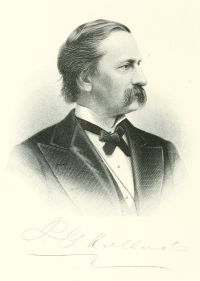
Portrait of Herbert Spencer Herbert Spencer,  The Data of Ethics

“ Justice, which formulates the range of conduct and limitations to conduct hence arising, is at once the most important division of Ethics and the division which admits of the greatest definiteness. That principle of equivalence which meets us when we seek its roots in the laws of individual life, involves the idea of measure; and on passing to social life, the same principle introduces us to the conception of equity or equalness, in the relations of citizens to one another: the elements of the questions arising are quantitative, and hence the solutions assume a more scientific form. ”
Source: Gutenberg

Popular Science Monthly (1875)

“ Our author further shows that the three scholastic principles, Identity, Contradiction, and Ratio Sufficiens, are all reducible to the principle of equivalence.
In discussing his second [third] problem, "From the Known to the Unknown," the author analyzes the process of the growth of knowledge
”
Source: Wikisource

Get perspective with Kwize: daily news enlightened by great literature