Summary

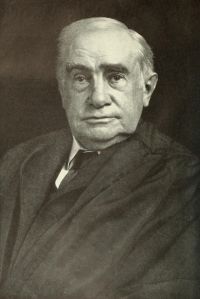
Portrait of Henry Billings Brown Henry Billings Brown Ansonia Brass Copper Company v…

On the other hand, if an old device or process be put to a new use, which is not analogous to the old one, and the adaptation of such process to the new use is of such a character as to require the exercise of inventive skill to produce it, such new use will not be denied the merit of patentability. That, however, is not the case here, since the Cowles process had been substantially used by Holmes for the same propose of insulating an electric wire, and the discovery of its incombustible feature involved nothing that was new in its use or method of application.
Source: Wikisource

Portrait of Henry Billings Brown Henry Billings Brown Ansonia Brass Copper Company v…

It had, however, been a matter of common knowledge for many years that paint was practically non-combustible. While the linseed oil in paint is to a certain extent combustible, the carbonate of lead is a material both non-combustible and a non-conductor.
It is clear that none of these English patents can be claimed as anticipations, since they all relate to the protection of land or submarine telegraph cables; and the use of paint, so far as it was used at all, was simply as a water-proof covering for a braided wire.
Source: Wikisource

Portrait of Henry Billings Brown Henry Billings Brown Ansonia Brass Copper Company v…

The art of insulating electric wires has been known almost as long as that of conducting electricity for practical purposes by means of wires. Prior to the use of electricity for lighting, however, the feeble character of the currents conveyed upon these wires did not require that the insulating material should be non-combustible, and the skill of the inventor was directed towards a method of insulation which should protect the wire from moisture and other external injury.
Source: Wikisource

Get perspective with Kwize: daily news enlightened by great literature