“ She was silent. She had not looked at me while she spoke. "May I lift your braid?" I asked her. "What a lovely braid—how very beautiful it is!" "My friend has kissed it," she said, and pushed back my hand. "Forgive me," I said then, and my heart pounded more and more. "May I not look at your ring—it shines so golden and is also so very beautiful. I should like to look at it and admire it for your sake." ”
Braid
Definition and stakes
A braid, a complex intertwining of strands, symbolizes both functional craftsmanship and artistic expression. From Knut Hamsun’s lyrical portrayal of a braid as a tender gesture to Waheenee’s practical account of braiding methods among the Hidatsa, the theme reveals diverse cultural and utilitarian aspects. Mrs.
Beeton’s guide to needlework emphasizes its decorative role, while Mark Campbell’s 19th-century treatise outlines its technical execution. These varied perspectives highlight the braid’s duality as both a practical tool and a metaphor for interconnectedness, bridging the tangible and the symbolic across different fields.
Quotes about “braid”
Waheenee,
Agriculture of the Hidatsa Indians…
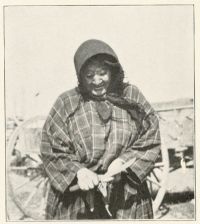
“ A braid was long enough to reach from the thigh around under the foot and up again to the other side of the thigh. A husker would try the newly made braid with his foot as he held the ends in his hands. Unless this was done a weak place in the string might escape notice and the braid break, and all the others would then laugh.“Small ears were tossed into one place. ”
Unknown, The Ladies' Work-Book
“ French braid, whether made of linen or of cotton, is laid on the pattern with stitches taken across it, from one edge to the other. This mode of putting on braid prevents it from stretching, as, from the nature of the plait, it would otherwise do. In forming angles, each edge should be sewn down to the paper, and then the braid turned over. Circles are made by laying the braid on the design, and forming it into the proper shape with the fingers, before tacking it down. ”
Mrs. Beeton, Beeton's Book of Needlework
“ TO PLACE THE BRAID.--No. 442 shows the design traced upon paper or tracing cloth, and lightly tacked to a foundation of leather or toile cirée. Run on a straight line of braid for the lower edge, with fine stitches, working as shown from left to right. Take another piece of braid, or the other end of the same piece, and begin to lay the braid by "running" stitches in its centre, keeping it as smooth and even as possible. The outer edge presents no difficulty, but the inner edge will not lie evenly without being drawn in by a needle and thread, as follows:--Thread a No. ”
active 19th century Mark Campbell, Self-Instructor in the Art of Hair Work…
“ Braid around ten times.Then commence at A, take Nos. 1 and 2, lift across table to B and lay No. 1 outside of No. 4, and No. 2 between Nos. 1 and 2, and bring back Nos. 1 and 2 from B to A, and lay No. 1 outside of No. 4, and No. 2 outside of No. 1 at A; then change the same at C, B and D; then commence again at A and braid ten rounds, so on braiding alternately ten rounds by the directions of each pattern until the braid is finished. [50] Take sixteen strands eighty hairs in a strand, and place on table like pattern. ”
Unknown, The Ladies' Work-Book
“ The outlines of any design in Point Lace are made in braid of various sorts, in thread, or sometimes in linen. The braid used is either French linen or cotton braid, or that now known as Italian braid. French braid is a simple plait, more or less wide; Italian braid is, in fact, a pillow lace insertion, somewhat resembling a tape, but with edges like those seen in all other pillow lace. It enters very much into the composition of Venetian and other valuable Italian lace, whence the name Italian braid has been given to it. ”
William Deskitt Foot Vincent, The cutters' practical guide to the cutting of ladies' garments (1892)
“ Braid is always a favourite style of ornamentation with the high-class ladies' tailor; and, when nicely done and the braid of good quality, it needs nothing else to stamp the garment as a high-class production. Braid is generally arranged on symmetrical designs, that is, the one side is an exact repetition of the other, only in reverse. When the ladies' tailor has to braid a skirt, he either has to get a ready prepared design that can be transferred to the material with a hot iron, or has to design one himself, which, if he has any idea of drawing, is a very easy operation. ”
active 19th century Mark Campbell, Self-Instructor in the Art of Hair Work…
“ Braid this over a round stick, the size you want the braid for use, varying the number of strands according to the size of the stick; then slip the braid from the stick on to the mold you wish to use, tying the braid so it will fit the mold exactly, and then boil in water five minutes, and take it out and put it in an oven, as hot as it will bear without burning, until it is quite dry. Then it is ready for use. [122] The hair to be used in braiding should be combed perfectly straight, and tied with a string at the roots, to prevent wasting. ”
Effie Archer Archer, The Library of Work and Play: Needlecraft
“ Another cross-stitch design A very simple thing to do is to braid a dress for yourself. Now that all the large pattern houses are carrying transfer patterns you can get a design [107] for braiding very cheap. A little girl I know braided a dress for herself and one for her mother last summer. She used light blue chambray and braided it with white. There are several kinds of braid, but the easiest to use is soutache, whether it is cotton or silk. It is a flat braid and varies in width from one to three eighths of an inch. ”
Various, St. Nicholas Magazine for Boys and Girls…
“ They are made of brown crash, bound with red worsted braid. One end is pointed so as to turn [page 44] over and button down, or the top has strings over the braid to tie the mouth up. There should be three or four made at a time, as each holds but one pair of shoes; and you will find that mamma or your unmarried aunts will like them very much. ”
active 19th century Mark Campbell, Self-Instructor in the Art of Hair Work…
“ The Nos. 1 and 2 are for braiding chains over—the No. 1 for small chains, and the No. 2 for large sizes. No. 3 is used for braiding tight or open work braids, of from thirty to forty strands. No. 4 is used for the same braids, with from forty to sixty strands in a braid. The mold may be made any length, to accommodate the work. [131] The above cuts show the size of forms used for tight or open work braids. ”
active 19th century Mark Campbell, Self-Instructor in the Art of Hair Work…
“ Select any article you may wish to make, and by referring to the patterns, you can easily find the style and directions whereby to braid it. We might have given twice the number of patterns, or even more, but any person can, after a little experience, readily invent new and different styles of braids, and by so doing, each can satisfy their own peculiar taste. ”
Charles E. White, Gimp Braiding Projects
“ The braiding is done in the same way as that described for the leash, beginning with the upper right strand. (Fig. 16.) When only one foot of lacing is left, form the loop of the lanyard by folding the braid back as in figure 41. Cross the two lower strands behind the main braid (Fig. 42) , and finish with the square or spiral braid and the lock knot as described for the leash. If you wish the square braid to slip along the lanyard, braid it loosely.The alternative pattern shown is made by arranging the strands at the start as in figure 43. Fig. 40 Fig. ”
Rudolph Adolph Acher, The American Journal of Psychology (1910)
“ The girls very frequently use the braids to make circular or other shaped mats. They also braid rags and make rugs of them. Hay, grass, clover stems, or varied colored strings are braided and from these are made necklaces, watch chains, bracelets, or rings; corn husks and silks are braided and used for doll's hair. The boys use the braided cord, grass, straw, leather, or willow bark, for harness, whips, fish nets, swings, to make bows or as belts for machines. Boys have a greater interest in saving string and when they find a cord of any kind it usually finds its way into their pockets. ”
Thomas Williamson, The East India Vade-Mecum, Volume 1…
“ All the hair appertaining to the hinder part of the head, is braided together for its whole length, and ultimately blended with black ribbon; which continues the braid for many inches, or even for a foot or more, so as to render it doubtful, at a certain distance, whether the hair does not occupy the whole length. ”
Effie Archer Archer, The Library of Work and Play: Needlecraft
“ Thread your needle with sewing cotton or silk the colour of the braid and sew it down with little running stitches and an occasional back-stitch to fasten it firmly. When you come to the end of the line or of the braid, carry the end through as at the beginning and fasten. ”
“ A very pretty design for insertion is here given. The braid may be basted as seen in the picture, and then the bars may be made of single threads, and of single threads over-wrought with button-hole stitches. Or, any of the bars or other stitches described, may be used to connect the braid and fill in the spaces. Tiny "spiders" are already used to fill in the circles. ”
Mrs. Beeton, Beeton's Book of Needlework
“ Two or three fastening off stitches should be worked when each circle, half circle, or rounded curve of a pattern is finished, as the drawing or gathering thread remains in the work, and forms an important, though unseen, part of its structure.As much of the beauty of point lace depends upon the manner of placing the braid, ladies cannot bestow too much pains upon this part of the work, which is a little troublesome to beginners. Many fancy shops now undertake this braid-placing for ladies, who can have their own pattern braided and commenced or braided alone at trifling expense. ”
Samuel R. Wells, How to Behave: A Pocket Manual of Republican Etiquette…
“ Persons with very long, narrow heads may wear the hair knotted very low at the back of the neck. If the head be long, but not very narrow, the back hair may be drawn to one side, braided in a thick braid, and wound around the head. When the head is round, the hair should be formed in a braid in the middle of the back of the head. If the braid be made to resemble a basket, and a few curls permitted to fall from within it, the shape of the head is much improved. ”
“ To make: 1. Cut 12′′ middy braid. Fold in half and roll raw ends around pearl and continue rolling braid on itself to form disk, place pin thru end and pearl to hold. Hand tack securely. Repeat for other motifs.2. Hand tack circles together in form of cross with braid ends to inside.3. Cut 11′′ middy braid. Fold in half and glue together. Starting between side disks bury raw ends and glue braid around entire outside curving to fit entire shape. Pull up 1′′ of braid at top to form loop and hand tack. Continue gluing to end. Insert chain into loop. ”
Anonymous, Embroidery and Fancy Work (1889)
“ For the middle of d'oyley, join the braid neatly with a needle and cotton to the piece of braid the first circle was begun with. Count the points of braid in No. 107, and arrange them as shown in the cut. The straight inner lines of braid lying together are sewn to the two middle points of the braid, which connect the circles. The inner lines are worked with two chain, one double into the two points lying together. Repeat nine times more; this finishes the straight centre lines. The chain-stitches in the centre of each division can be easily worked from the design. ”
Anne Knox Arthur, An embroidery book (1920)
“ This being assured, arrange a braid or cross-bar of material round the outer part; tack it at the outer edge with bright-coloured wool on to the paper foundation, then adjust the bars and panels, allowing the ends of the braids to slip under the outer braid. Circles or squares of ribbon, velvet, or tinsel, placed in the most important parts and tied to the outer edges with lines of braid or ribbon, which, in turn, might be connected with open stitchery, fork-pin insertion (Fig. 73) , or some small beads, are very pretty. All give scope for individual taste and ingenuity in colour and material. ”
Effie Archer Archer, The Library of Work and Play: Needlecraft
“ After the braid has been made it can be sewed together for a mat. In joining a strand insert the new piece so that it extends a little beyond the braid. If a long braid is desired it is best to have the strands of different lengths so that the joinings will not be all in one place (Figure 225) .When braiding or weaving with rags cut the strips about three quarters of an inch wide. Old rags can be used for this, cutting out the weak parts. Cheap cotton fabrics when new make excellent mats.Weaving on frames is very interesting and not such a difficult task as you imagine. ”
Gene Allen Martin, Make your own hats
“ Great care and patience must be exercised in covering a hat with straw braid. The lines which are to be emphasized should be carefully studied, as there are several methods used in laying the braid on the frames. (See illustration.) The stitch used for sewing braid is always the same—a very short stitch on the right side, and a stitch one-quarter of an inch long on the wrong side. The thread must not be pulled too tight, or the position of the stitches may be seen; also always match the thread to the straw. ”
William Deskitt Foot Vincent, The Cutters' Practical Guide
“ Regimental Officers—Rank will be shown by braiding on the sleeves with drab braid and by distinction badges on the sleeves, as shown on the accompanying illustration. It will be seen that there is a slash six inches long at the forearm sean, and seven inches long at the points 21⁄2 inches wide at the bottom, and 3 inches at the top. This is edged with fancy drab braid. Distinction marks according to tank are put in the slash. Round the cuffs are rows of braid, together with narrow Russia braid, also of drab. ”
Henry Billings Brown,
Giles v. Heysinger — Opinion of the Court
“ The advantage of cementing the braid to the core throughout its entire length is stated in their patent to be 'so that when cut into proper lengths for use the ends will not fray out, but remain the same, into whatever number of pieces the crimper may be divided,' while the outer surface of the braid is left soft and unsaturated. ”
Anne Knox Arthur, An embroidery book (1920)
“ The design is very simple; it is made up with French braid in varying lengths formed into curves at the corners; the ground is of white linen. The braid is sewn on in blue cotton with a small button-hole stitch; the little daisies of loop stitch and the surface filling of the centre are also in colour. The open web in the centre is a simple lace stitch worked in button-holing. ”
Lucy Maud Montgomery,
Anne of Green Gables
(1908)
“ Pull out that frill a little more—so; here, let me tie your sash; now for your slippers. I’m going to braid your hair in two thick braids, and tie them half-way up with big white bows—no, don’t pull out a single curl over your forehead—just have the soft part. ”
Thérèse de Dillmont,
Encyclopedia of Needlework
“ Plain twisted bar (fig. 694) .—Secure the thread to the braid and throw it across from one braid edge to the other, put the needle in downwards from above, and overcast the first thread, so as to form the two into a cord. If you do not make enough overcasting stitches to tighten the two threads, the bars will be loose and untidy and spoil the general appearance of the work. ”
William Le Queux,
An Observer in the Near East
“ In every street you will see a dozen men squatting cross-legged in a little dark shop, busily plying the needle upon the narrow black braid, and applying tiny pieces of green cloth among the braid as additional ornament. ”
active 19th century Mark Campbell, Self-Instructor in the Art of Hair Work…
“ After you have the small braids all completed and prepared, as required in the explanation, sew them together at one end, so they all lie smooth and flat, then divide them off in twos, using each two as one strand, and plait them together; commence at the right side, take one strand at a time, and lift over one and under two till you get to the center, then commence on the left side and braid the same way, and so on till finished. Then sew the ends well, trim them, and put on a little shellac to fasten them in the clasps. ”