“ Its brim is written over—o'er and o'er; 'Tis mute; but have you made its marble lips As sweet as Music's?WALTER. Miserable words! The offspring of some most unhappy hours. To me this fountain's brim is sad as though 'Twere splashed with my own blood.VIOLET (reads) . "Nature cares not Although her loveliness should ne'er be seen By human eyes, nor praised by human tongues. ”
Brim
Definition and stakes
The brim, the projecting edge of a hat's crown, serves both functional and decorative roles, shielding the head from the elements while often reflecting cultural aesthetics. From Alexander Smith’s poetic reflections on a “fountain’s brim” to Robert Browning’s metaphorical portrayal of night’s edge, writers have incorporated the brim into stories of light, protection, and form.
Honoré de Balzac evokes landscape imagery, while Henry James highlights the brim’s function in defining fashion’s “elaborately decorative” silhouette. Whether in practical guides on hat-making or in metaphorical poetry, the brim represents a meeting of utility and symbolism, its significance shaped by context and craftsmanship.
Quotes about “brim”
 Robert Browning,
Selections from the Poems and Plays of Robert Browning
Robert Browning,
Selections from the Poems and Plays of Robert Browning
“ O'er night's brim, day boils at last; Boils, pure gold, o'er the cloud-cup's brim Where spurting and suppressed it lay,5 For not a froth-flake touched the rim Of yonder gap in the solid gray Of the eastern cloud, an hour away; ”
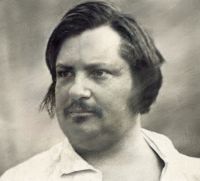 Honoré de Balzac,
Eve and David
(1843)
Honoré de Balzac,
Eve and David
(1843)
“ No sword-grass grows about the margin; there are no blue water forget-me-nots, nor broad lily leaves; the grass at the brim is short and thick, and the weeping willows that droop over the edge grow picturesquely enough. It is easy to imagine a sheer precipice beneath filled with water to the brim. Any man who should have the courage to fill his pockets with pebbles would not fail to find death, and never be seen thereafter.At the time while he admired the lovely miniature of a landscape, the poet had thought to himself, "'Tis a spot to make your mouth water for a noyade." ”
Henry James, Lady Barbarina, The Siege of London…
“ The men, with their eyes before them, with hats of undulating brim, good profiles, high collars, white flowers on their chests, long legs and long feet, had an air more elaboratively decorative, as they jolted beside the ladies, always out of step. ”
hatter John Thomson, A Treatise on Hat-Making and Felting
“ A dry, thin, and soft fur or wool body is to be drawn upon the proper block, generally 3 or 4 inches deep with either a square or round crown, and the brim spread out upon the bench or bottom board. A circular piece of gutta-percha gum the size of the intended brim, having its centre cut out, is to be slipped over the crown down on to the felt brim; a similar piece of good cloth is likewise slipped over in the same manner to cover the gum, and now the extreme outer edges of the felt and cloth are to be carefully cemented together by means of the gum, by passing round a hot iron. ”
Autumn Leaves: Original Pieces in Prose and Verse
“ A gentleman goes into a fashionable hatter's, and the shopman, holding up for admiration a hat with a crown a foot high, of the genuine stove-pipe form, and a brim an inch wide, says, "This is the newest style, Sir." The gentleman walks home with the ugly thing on his head, but no one stares or laughs. 'Tis a new fashion, but all "take it easy." A year later, perhaps, the hatter shows him a thing with a brim a half an inch wider, but rolled up at the sides, and a crown of a much greater diameter at the top than where it joins the brim,—a specimen of the bell-crown. ”
Friedrich Kluge, An Etymological Dictionary of the German Language (1891)
“ This again is cognate with Middle High German brëmen, Old High German brëman, strong verb, ‘to growl, roar,’ since mm belongs properly only to the present and not to the other tenses. The cognates of the stem brëm-, which these verbs indicate, also includes Old Icelandic brim, ‘surge,’ Middle English brim, ‘glow’ (English brimstone) ”
 Francis Hopkinson Smith,
Felix O'Day
Francis Hopkinson Smith,
Felix O'Day
“ Across this flood of frenzied brilliance surge hurrying mobs, dodging the ceaseless traffic, trampling underfoot the wealth of the Indies, striding through pools of quicksilver, leaping gutters filled to the brim with melted rubies—horse, car, and man so many black silhouettes against a tremulous sea of light. ”
 George Meredith,
The Ordeal of Richard Feverel…
George Meredith,
The Ordeal of Richard Feverel…
“ Above green-flashing plunges of a weir, and shaken by the thunder below, lilies, golden and white, were swaying at anchor among the reeds. Meadow-sweet hung from the banks thick with weed and trailing bramble, and there also hung a daughter of earth. Her face was shaded by a broad straw hat with a flexible brim that left her lips and chin in the sun, and, sometimes nodding, sent forth a light of promising eyes. Across her shoulders, and behind, flowed large loose curls, brown in shadow, almost golden where the ray touched them. ”
Viscount James Bryce Bryce, South America: Observations and Impressions
“ The women wear round felts or cloth-covered straws, some almost as wide as a cardinal's; many are square, set off by gilt or silvered bands like the academic cap of the English Universities, though the brim is larger. ”
 Basil Hall,
Account of a Voyage of Discovery
Basil Hall,
Account of a Voyage of Discovery
“ Some men, who appeared to be superior to the rest, were distinguished by a hat, the brim of which was nearly three feet in diameter, and the crown, which was about nine inches high, and scarcely large enough to admit the top of the head, was shaped like a sugar-loaf with the end cut off. ”
G. Woolliscroft Rhead, Chats on Costume
“ The simple flat cap above mentioned was developed in various ways during the Tudor period, both for men and for women; the brim was either divided in two or more parts, or it was doubled, slashed, and puffed in various ways, the puffing being of a different material and colour to the rest of the hat. For women and for the military, large plumes of ostrich feathers were added. ”
 Brigham Young,
Journal of Discourses — Volume 13…
Brigham Young,
Journal of Discourses — Volume 13…
“ If he can make the people believe that he knows it all, and that they know nothing, he would as soon wear a hat with a brim six inches wide, and the crown an inch and a half high, as he would wear one with the crown six inches high and the brim an inch and a half wide. ”
“ For him to conquer. He learned all there was To learn about not launching out too soon And so not carrying the tree away Clear to the ground. He always kept his poise To the top branches, climbing carefully With the same pains you use to fill a cup Up to the brim, and even above the brim. Then he flung outward, feet first, with a swish, Kicking his way down through the air to the ground. So was I once myself a swinger of birches. ”
 W. M. Flinders Petrie,
Methods & Aims in Archaeology
W. M. Flinders Petrie,
Methods & Aims in Archaeology
“ At least twenty different directions of fracture can be mentally distinguished, and the slight curve and irregularities increase this to at least fifty varieties, so that each piece of brim only needs actual touching with about 2 per cent of the pieces of middle. When every possible fit of brim to middle pieces is made, then the bases can be similarly compared, having first fitted them by sorting the curvatures. ”
The Bible, Douay-Rheims, Book 11…
“ And a graven work, under the brim of it, compassed it for ten cubits going about the sea: there were two rows cast of chamfered sculptures.7:25. And it stood upon twelve oxen, of which three looked towards the north, and three towards the west, and three towards the south, and three towards the east: and the sea was above upon them, and their hinder parts were all hid within.7:26. And the laver was a hand breadth thick: and the brim thereof was like the brim of a cup, or the leaf of a crisped lily: it contained two thousand bates.Two thousand bates... That is, about ten thousand gallons. ”
“ As for my breath smelling of brimstone, I really can't help it, and I once met a man whose breath smelled of onions, which I consider far worse." "I don't," said Betsy; "I love onions. "And I love brimstone," declared the dragon, "so don't let us quarrel over one another's peculiarities." ”
Jakob Jakobsen, An Etymological Dictionary of the Norn Language in Shetland…
“ Fo. [brimi] ; — heat and smoke from the fire on the hearth, a brim o’ reek [‘smoke’] : U. [brim] ; a bräima o’ reek (locality uncertain) ; — direction which the smoke from the fire-place takes, to sit i’ de brim [bri̇̄əm, brɩm] or briv [bri̇̄v] o’ de reek (Nm.) ; to sit i’ de brem or brema (De., Nm. occas.) . 2) aurora borealis (in the form of a bright fog-bank) , a brimi [brimi] o’ pretty dancers (pretty dancers = aurora b.) ; Wests. (Sa.) . 3) narrow strip of clouds, strip of fog or mist, esp. of a somewhat light or yellowish (dull) colour, a brimi or brim [brɩm] ower de sky (N.Roe) ”
 Art Young,
Through hell with Hiprah Hunt
(1901)
Art Young,
Through hell with Hiprah Hunt
(1901)
“ Finally, he comes to a projecting precipice from which he peers and discerns a dim light through the sluggishly rising smoke. As he crawls lower he hears voices, and a great commotion. An odor of burning brimstone fills the air. He swings out from an overhanging rock and allows himself to drop. ”
 Bret Harte,
The Crusade of the Excelsior
Bret Harte,
The Crusade of the Excelsior
“ It would have been impossible for any woman but Mrs. Brimmer to have regarded the childlike earnestness and melancholy simplicity of this grown-up man without a pang. Even this superior woman experienced a sensible awkwardness as she slipped from the hammock and regained an upright position. ”
 Charles Kingsley,
The Heroes; Or, Greek Fairy Tales for My Children
Charles Kingsley,
The Heroes; Or, Greek Fairy Tales for My Children
“ And over the gateway sits Brimo, the wild witch-huntress of the woods, brandishing a pine-torch in her hands, while her mad hounds howl around. No man dare meet her or look on her, but only I her priestess, and she watches far and wide lest any stranger should come near.’‘No wall so high but it may be climbed at last, and no wood so thick but it may be crawled through; no serpent so wary but he may be charmed, or witch-queen so fierce but spells may soothe her ”
 H. De Vere Stacpoole,
The Return
H. De Vere Stacpoole,
The Return
“ These both were cast alive into a lake of fire burning with brimstone." Many days pass, and scarcely living, I am taken from the cell. I stand in a room before a man who sits at a table, a man bald, wrinkled, laughing at times, who questions me. ”
Friedrich Kluge, An Etymological Dictionary of the German Language (1891)
“ Yet E. breeze (horsefly) cannot be cognate, since breósa (and not brimes) is its AS. form. The root of Bremse, discussed under brummen, is brem (pre-Teut. bhrem, Lat. fremere) , ‘to buzz, hum,’ whence also Sans. ”
Oliver Wendell Holmes, The One Hoss Shay
“ The gates swung open, and out they flew “Where are our broomsticks?” the beldams cried. [68] [69] “Here are your broomsticks,” an imp replied. “They’ve been in—the place you know—so long They smell of brimstone uncommon strong; But they’ve gained by being left alone,— Just look, and you’ll see how tall they’ve grown.” ”
“ but every lyar Must have his portion in the lake That burns with brimstone and with fire. ”
 H. G. Wells,
Mr. Brisher's Treasure
H. G. Wells,
Mr. Brisher's Treasure
“ He had gold spectacles, I remember, and used to look over 'em at you while he sang hearty--he was always great on singing 'earty to the Lord-- and when he got out o' toon 'arf the people went after 'im--always. 'E was that sort of man. And to walk be'ind 'im in 'is nice black clo'es--'is 'at was a brimmer--made one regular proud to be engaged to such a father-in-law. ”
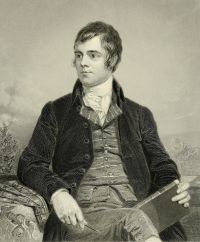 Robert Burns,
Poems and Songs of Robert Burns
Robert Burns,
Poems and Songs of Robert Burns
“ Breeks, breeches. Breer, brier. Brent, brand. Brent, straight, steep (i.e., not sloping from baldness) . Brie, v. barley-brie. Brief, writ. Brier, briar. Brig, bridge. Brisket, breast. Brither, brother. Brock, a badger. Brogue, a trick. Broo, soup, broth, water; liquid in which anything is cooked. Brooses, wedding races from the church to the home of the bride. Brose, a thick mixture of meal and warm water; also a synonym for porridge. Browster wives, ale wives. Brugh, a burgh. Brulzie, brulyie, a brawl. Brunstane, brimstone. Brunt, burned. Brust, burst. Buckie, dim. of buck; a smart younker. ”
 Harry Houdini,
Miracle Mongers and Their Methods
(1920)
Harry Houdini,
Miracle Mongers and Their Methods
(1920)
“ The eating of burning brimstone is an entirely fake performance. ”
Various, Punch, or the London Charivari…
“ He should be tall,"—her eye fell on Briggs—"he should be handsome,"—still on Briggs—"he should be graceful, he should be athletic."—At this point her eye seemed fairly to feast on Briggs, and a curious lurid light lowered in it. She paused a moment. I was sitting next to Briggs, and I felt a shiver run through him. I looked at his face, and it was ghastly pale. I asked him in a whisper if he felt faint? He impatiently motioned me to be silent, and remained, as I thought, like a bird paralysed beneath the gaze of a serpent. ”
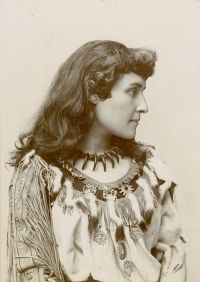 E. Pauline Johnson,
Flint and Feather — Brier
(1914)
E. Pauline Johnson,
Flint and Feather — Brier
(1914)
“ BRIER GOOD FRIDAY Because, dear Christ, your tender, wounded arm Bends back the brier that edges life's long way, That no hurt comes to heart, to soul no harm, I do not feel the thorns so much to-day. ”
Robert Burns,
Poems and Songs of Robert Burns
“ We wander there, we wander here, We eye the rose upon the brier, Unmindful that the thorn is near, Among the leaves; And tho' the puny wound appear, Short while it grieves. Some, lucky, find a flow'ry spot, For which they never toil'd nor swat; They drink the sweet and eat the fat, But care or pain ”
 Ann S. Stephens,
The Gold Brick
Ann S. Stephens,
The Gold Brick
“ You would not have believed that the man who walked so quietly along the greensward with the moonlight on his face, could have been the same person who stood on [112] the deck of that brig and superintended the number of lashes that should be dealt on the back of a human being. Once or twice, as his glance fell on some familiar object, a sweet brier bush, perhaps, or a cluster of tall mulleins that had grown by the footpath since he was a child, his eyes would fill with tears. There was something holy and homelike in the stillness that made a child of this cruel man. ”
 Harriet Beecher Stowe,
Dred: A Tale of the Great Dismal Swamp
Harriet Beecher Stowe,
Dred: A Tale of the Great Dismal Swamp
“ You would not have had all this underbrush, these dead limbs, these briers running riot over trees, and sometimes choking and killing them. You would have well-trimmed trees and velvet turf. But I love briers, dead limbs, and all, for their very savage freedom. Every once in a while you see in a wood a jessamine, or a sweet-brier, or a grape-vine, that throws itself into a gracefulness of growth which a landscape gardener would go down on his knees for, but cannot get. Nature resolutely denies it to him. ”
T. W. H. Crosland, The Unspeakable Scot
“ Ay, Burns is like a great mountain, based on earth, towering towards heaven—of a mixed character, containing gold, silver, brass, iron, and clay, and from which every man, according to his taste, can become enriched by the gold and the silver, or get mired in the clay. ”
Jacob Grimm and Wilhelm Grimm, The Fairy Tales of the Brothers Grimm… (1909)
“ Rose had been asleep for the last hundred years, and with her slept the King, Queen, and all her courtiers. He knew also, from his grandfather, that many princes had already come and sought to pierce through the briar hedge, and had remained caught in it and died a sad death. Then the young Prince said, ‘I am not afraid; I am determined to go and look upon the lovely Briar Rose.’ The young Prince said. ‘I am not afraid; I am determined to go and look upon the lovely Briar Rose.’ The good old man did all in his power to dissuade him, but the Prince would not listen to his words. ”
Florence Warden, Forge and furnace: A novel (1896)
“ She sprang up on Bram’s entrance, and remained beside him, without speaking a word, while he looked long and earnestly at the placid face, looking handsomer in death than it had ever looked in life, the waxen mask, refined and delicate beyond expression, the long golden moustache, the fair hair, silkier, smoother than Bram had ever seen them. ”
Robert Burns,
Poems and Songs of Robert Burns
“ Thou art a gay an' a bonnie lass, But thou has a waukrife minnie. The Captive Ribband Tune—“Robaidh dona gorach.” Dear Myra, the captive ribband's mine, 'Twas all my faithful love could gain; And would you ask me to resign The sole reward that crowns my pain? Go, bid the hero who has run Thro' fields of death to gather fame, Go, bid him lay his laurels down, And all his well-earn'd praise disclaim. The ribband shall its freedom lose— Lose all the bliss it had with you, And share the fate I would impose On thee, wert thou my captive too. ”
Jane Rice, The golden bridle (1943)
“ She has got on a sheet all draped and wrapped every which way and her feet is laced up in sandals and there is a wreath on her hair, only now it is setting cockeyed on account of as how these here people has been chasing her, and she is carrying a bridle. In fact, if I had of spent my money on John Barleycorn instead of faro, I probably would of joined in on the side of these here people who is laughing theirselves sick and grabbing at this here sheet and having a big time, for which I cannot blame them any as this woman is sure a curious sight. ”
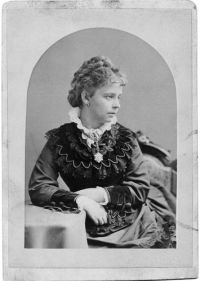 Alice Morse Earle,
Curious Punishments of Bygone Days
Alice Morse Earle,
Curious Punishments of Bygone Days
“ The brank or scold’s bridle was unknown in America in its English shape: though from colonial records we learn that scolding women were far too plentiful, and were gagged for that annoying and irritating habit. The brank, sometimes called the gossip’s bridle, or dame’s bridle, or scold’s helm, was truly a “brydle for a curste queane.” It was a shocking instrument, a sort of iron cage, often of great weight; when worn, covering the entire head; with a spiked plate or flat tongue of iron to be placed in the mouth over the tongue. Hence if the offender spoke she was cruelly hurt. ”
