“ And I, the long time intimate of John Barleycorn, knew just what he promised me—maggots of fancy, dreams of power, forgetfulness, anything and everything save whirling washers, revolving mangles, humming centrifugal wringers, and fancy starch and interminable processions of duck trousers moving in steam under my flying iron. And that's it. John Barleycorn makes his appeal to weakness and failure, to weariness and exhaustion. He is the easy way out. And he is lying all the time. ”
John Barleycorn
Definition and stakes
"John Barleycorn," an autobiographical novel by Jack London, published in 1913, delves into the dual nature of alcohol in human life through the prism of the author's personal battle with addiction. Inspired by the British folk song of the same name, the novel investigates how alcohol both fosters social connections and intensifies personal downfall, interweaving themes of masculinity, camaraderie, and existential despair.
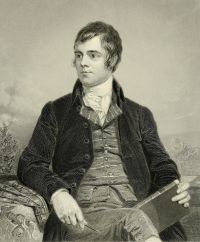
London differentiates his reflective, contemplative drinking from the thoughtless indulgence of others, while Robert Burns' poem honors the legendary figure of John Barleycorn as an emblem of collective joy and endurance. The narrative ultimately depicts alcohol as a contradictory force—both a spark for creativity and a force that erodes vitality—highlighting London’s sophisticated critique of its impact on society and the individual.
Quotes about “John Barleycorn”
“ John Barleycorn sends his White Logic, the argent messenger of truth beyond truth, the antithesis of life, cruel and bleak as interstellar space, pulseless and frozen as absolute zero, dazzling with the frost of irrefragable logic and unforgettable fact. John Barleycorn will not let the dreamer dream, the liver live. He destroys birth and death, and dissipates to mist the paradox of being, until his victim cries out, as in "The City of Dreadful Night": "Our life's a cheat, our death a black abyss." And the feet of the victim of such dreadful intimacy take hold of the way of death. ”
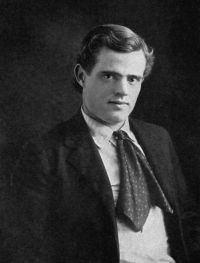 Jack London,
John Barleycorn
(1913)
Jack London,
John Barleycorn
(1913)
“ We pay for every nerve marathon we run, nor can John Barleycorn intercede and fend off the just payment. He can lead us to the heights, but he cannot keep us there, else would we all be devotees. And there is no devotee but pays for the mad dances John Barleycorn pipes.Yet the foregoing is all in after wisdom spoken. It was no part of the knowledge of the lad, fourteen years old, who sat in the Idler's cabin between the harpooner and the sailor, the air rich in his nostrils with the musty smell of men's sea-gear, roaring in chorus: "Yankee ship come down de ribber--pull, my bully boys, pull!" ”