“ I didn't know the first thing about girls. I, who had been hailed Prince of the Oyster Pirates, who could go anywhere in the world as a man amongst men; who could sail boats, lay aloft in black and storm, or go into the toughest hang-outs in sailor town and play my part in any rough-house that started or call all hands to the bar—I didn't know the first thing I might say or do with this slender little chit of a girl-woman whose scant skirt just reached her shoe-tops and who was as abysmally ignorant of life as I was, or thought I was, profoundly wise. ”
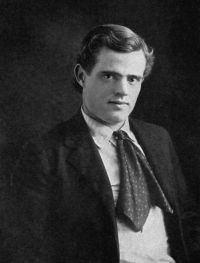
Jack London
Summary
Published in 1913, John Barleycorn is Jack London’s autobiographical exploration of his complex relationship with alcohol, blending personal narrative with philosophical reflection. The novel traces his experiences from his youth as a sailor to his later years as a celebrated writer, examining how alcohol both fostered male camaraderie and endangered his health and moral clarity.
Central themes include the duality of alcohol as a social bond and a destructive force, alongside the existential struggle between nihilistic “White Logic” and the practical truths sustaining life. A pivotal work in London’s oeuvre, it remains a poignant meditation on addiction, identity, and the tension between revelry and self-destruction.
Quotes from John Barleycorn (Jack London)
“ I am aware that within this disintegrating body which has been dying since I was born I carry a skeleton, that under the rind of flesh which is called my face is a bony, noseless death's head. All of which does not shudder me. To be afraid is to be healthy. Fear of death makes for life. But the curse of the White Logic is that it does not make one afraid. The world-sickness of the White Logic makes one grin jocosely into the face of the Noseless One and to sneer at all the phantasmagoria of living. ”
Jack London,
John Barleycorn
(1913)
“ Man, with his brain, can penetrate the intoxicating show of things and look upon the universe brazen with indifference toward him and his dreams. He can do this, but it is not well for him to do it. To live, and live abundantly, to sting with life, to be alive (which is to be what he is) , it is good that man be life-blinded and sense-struck. What is good is true. And this is the order of truth, lesser though it be, that man must know and guide his actions by with unswerving certitude that it is absolute truth and that in the universe no other order of truth can obtain. ”
