Summary

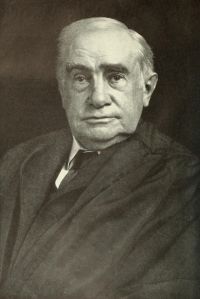
Portrait of Henry Billings Brown Henry Billings Brown Cowley v. Northern Pacific Railroad Company…

If any action or proceeding in a state court were subject to be defeated or impaired by one of the parties exercising his statutory right to remove it to a federal court, no one would be safe in instituting such a proceeding in any case wherein, by reason of diversity of citizenship or otherwise, it might be subject to removal. While the federal court may be compelled to deal with the case according to the forms and modes of proceeding of a court of equity, it remains in substance a proceeding under the statute, with the original rights of the parties unchanged.
Source: Wikisource

Portrait of Henry Billings Brown Henry Billings Brown Cowley v. Northern Pacific Railroad Company…

Although the statute of a state or territory may not restrict or limit the equitable jurisdiction of the federal courts, and may not directly enlarge such jurisdiction, it may establish new rights or privileges which the federal courts may enforce on their equity or admiralty side, precisely as they may enforce a new right of action given by statute upon their common-law side.
Source: Wikisource

Portrait of Henry Billings Brown Henry Billings Brown Cowley v. Northern Pacific Railroad Company…

Ct. 213, a bill in equity under a statute of Indiana, which averred that a deed was void upon its face, was held sufficient to support the jurisdiction of the circuit court of the United States in that district, to quiet the title of the complainant as against such deed, although courts of equity had generally adopted the rule that a deed void upon its face does not cast a cloud upon the title which a court of equity will undertake to remove.
Source: Wikisource

Get perspective with Kwize: daily news enlightened by great literature