Summary

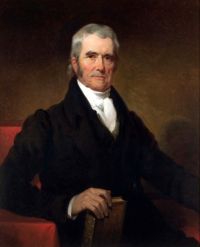
Portrait of John Marshall John Marshall Ex parte Watkins (28 U.S. 193)…

It is universally understood that the judgments of the courts of the United States, although their jurisdiction be not shown in the pleadings, are yet binding on all the world; and that this apparent want of jurisdiction can avail the party only on a writ of error. This acknowledged principle seems to us to settle the question now before the court. The judgment of the circuit court in a criminal-case is of itself evidence of its own legality, and requires for its support no inspection of the indictments on which it is founded.
Source: Wikisource

Portrait of John Marshall John Marshall Ex parte Watkins (28 U.S. 193)…

But with what propriety can this court look into the indictment? We have no power to examine the proceedings on a writ of error, and it would be strange, if, under colour of a writ to liberate an individual from unlawful imprisonment, we could substantially reverse a judgment which the law has placed beyond our control. An imprisonment under a judgment cannot be unlawful, unless that judgment be an absolute nullity; and it is not a nullity if the court has general jurisdiction of the subject, although it should be erroneous.
Source: Wikisource

Portrait of John Marshall John Marshall Ex parte Watkins (28 U.S. 193)…

The circuit court for the district of Columbia is a court of record, having general jurisdiction over criminal cases. An offence cognizable in any court, is cognizable in that court. If the offence be punishable by law, that court is competent to inflict the punishment. The judgment of such a tribunal has all the obligation which the judgment of any tribunal can have. To determine whether the offence charged in the indictment be legally punishable or not is among the most unquestionable of its powers and duties.
Source: Wikisource

Get perspective with Kwize: daily news enlightened by great literature