Summary

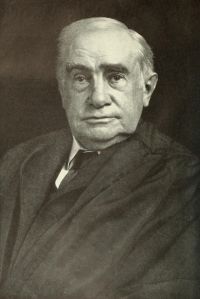
Portrait of Henry Billings Brown Henry Billings Brown Crawford v. Burke — Opinion of the Court

If a creditor has a claim against a debtor for goods sold which would ordinarily be covered by a discharge in bankruptcy, he is strongly tempted to allege, and if possible to prove, that the goods were purchased under a misrepresentation of the assets of the buyer, and thus to make out a claim for fraud which would not be discharged in bankruptcy.
Source: Wikisource

Portrait of Henry Billings Brown Henry Billings Brown Crawford v. Burke — Opinion of the Court

We are, therefore, of opinion that if a debt originates or is "founded upon an open account or upon a contract, express or implied," it is provable against the bankrupt's estate, though the creditor may elect to bring his action in trover, as for a fraudulent conversion, instead of in assumpsit, for a balance due upon an open account. It certainly could not have been the intention of Congress to extend the operation of the discharge under § 17 to debts that were not provable under § 63a.
Source: Wikisource

Get perspective with Kwize: daily news enlightened by great literature