Summary

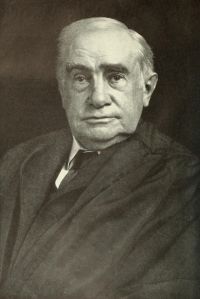
Portrait of Henry Billings Brown Henry Billings Brown Downs v. United States — Opinion of the Court

The mere imposition of an import duty of 3 rubles per pood, paid upon foreign sugar, is, like all protective duties, a bounty, but is a bounty upon production, and not upon exportation. When a tax is imposed upon all sugar produced, but is remitted upon all sugar exported, then, by whatever process, or in whatever manner, or under whatever name, it is disguised, it is a bounty upon exportation.
Source: Wikisource

Portrait of Henry Billings Brown Henry Billings Brown Downs v. United States — Opinion of the Court

All producers fare equally well before the law. Those who sell at home receive the high prices insured on the home market, while those who export what is the equivalent thereto,-the foreign market price plus the price of the export certificate. Hence there is no bounty on exportation, for the reward of the manufacturer is not conditioned on exportation, nor is it greater than it would have been had he not exported.
Source: Wikisource

Portrait of Henry Billings Brown Henry Billings Brown Downs v. United States — Opinion of the Court

As the government is interested only in the amount of free sugar produced, and not in the particular person producing it,-the allotment to each factory being merely to do equal justice to all, it permits the seaboard manufacturer to export his free sugar without tax, and to assign his right to the interior manufacturer to sell as much additional free sugar as is represented by the amount exported, or convert his 'surplus' into 'free sugar,' thus saving the additional tax.
Source: Wikisource

Get perspective with Kwize: daily news enlightened by great literature