Summary

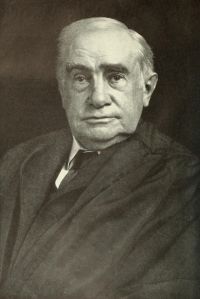
Portrait of Henry Billings Brown Henry Billings Brown Dunlop v. United States — Opinion of the Court

If it were broadly true that the presumption of innocence overrides every other presumption except those of sanity and knowledge of the law, it would be impossible to convict in any case upon circumstantial evidence, since the gist of such evidence is that certain facts may be inferred or presumed from proof of other facts. Thus, if property recently stolen be found in the possession of a certain person, it may be presumed that he stole it, and such presumption is sufficient to authorize the jury to convict, notwithstanding the presumption of his innocence.
Source: Wikisource

Portrait of Henry Billings Brown Henry Billings Brown Dunlop v. United States — Opinion of the Court

So, if a person be stabbed to death, and another, who was last seen in his company, were arrested near the spot with a bloody dagger in his possession, it would raise, in the absence of explanatory evidence, a presumption of fact that he had killed him. So, if it were shown that the shoes of an accused person were of peculiar size or shape, and footmarks were found in the mud or snow of corresponding size or shape, it would raise a presumption, more or less strong according to the circumstances, that those marks had been made by the feet of the accused person.
Source: Wikisource

Portrait of Henry Billings Brown Henry Billings Brown Dunlop v. United States — Opinion of the Court

Complaint is also made of the remark of the district attorney to the following effect: 'Now, gentlemen, it is not necessary for me to tell you what the massage treatment is; how a man is stripped naked, from the sole of his feet to the crown of his head, and is rubbed with the hands.' If the counsel gave a wholly erroneous definition of the word 'massage,' or misled the jury by giving them a false impression of the operation, the remark might be prejudicial, and possible ground for error.
Source: Wikisource

Get perspective with Kwize: daily news enlightened by great literature